
Bittangabee Bay to Green Cape Lighthouse
 Download & Print Map and Notes
 3 hrs
3 hrs 8.5 km One way
 191 m
191 m Hard track

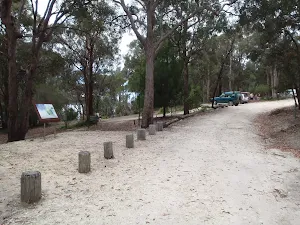
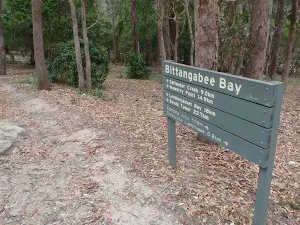
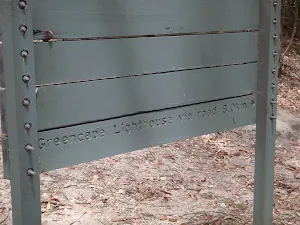
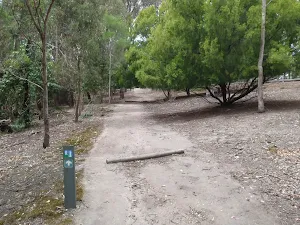
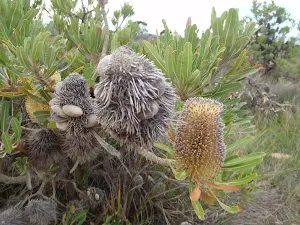
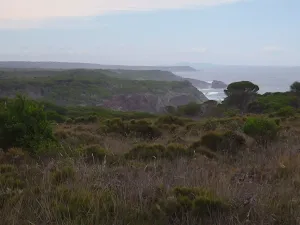
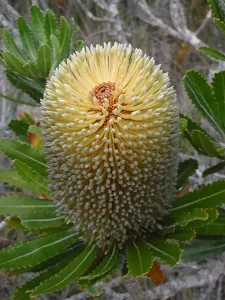
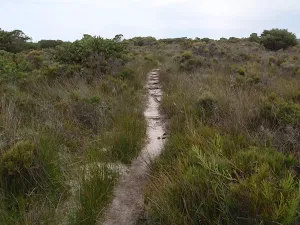
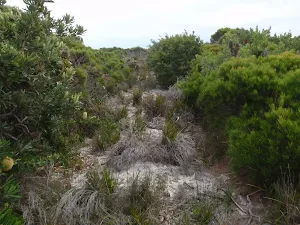
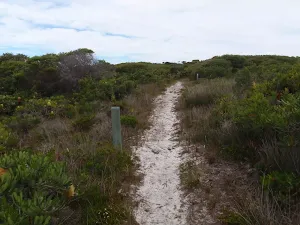
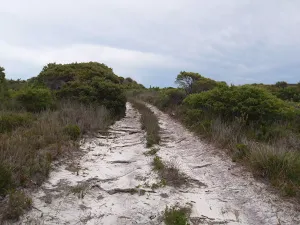
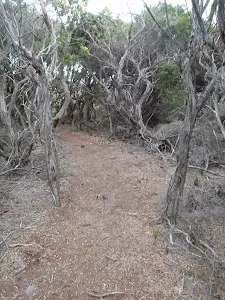
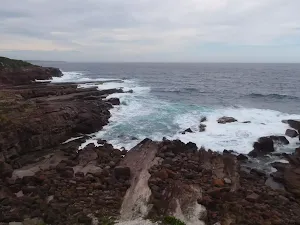
Bittangabee campground
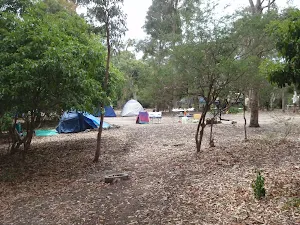
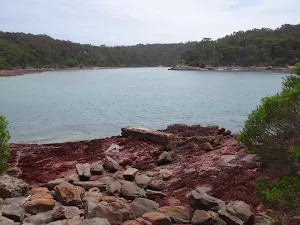
Bittangabee Bay Beach
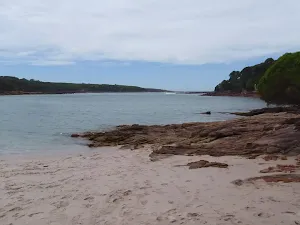
(0km) Bittangabee Bay Picnic Area → Bittangabee Storehouse Ruins
 320 m
320 m
 8 mins
 13m
13m
 -19m
Hard track
-19m
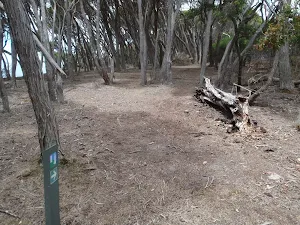
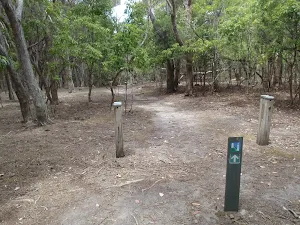
Hard trackTurn left: From the intersection, the walk follows the sign for 'Walking Track' (not the same direction as the 'Beach' arrow) down the hill. The track leads down the hill a short way to an arrow track marker.
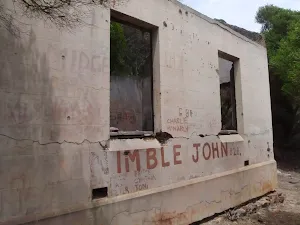
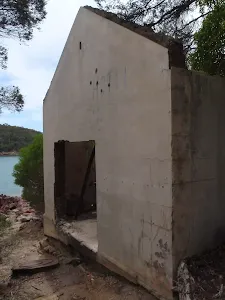
Continue straight: From the intersection, this walk does not follow the arrow marker but heads straight down the hill towards the water. The walk steps down to the water's edge where there is a roofless building on the right. The walk follows around the building on the water side, to an information sign.
Bittangabee Storehouse ruins
(0km) Bittangabee Storehouse Ruins → Bittangabee Sth Headland Lookout
220 m
4 mins
8m
0m
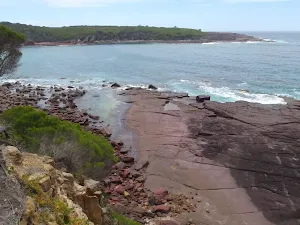
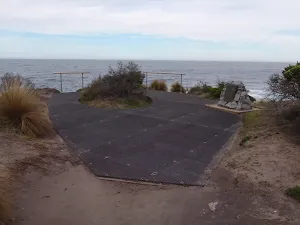
Moderate trackVeer left: From the intersection, this walk follows the 'Walking Track' sign and arrow posts up the hill. The track winds through the heath and melaleuca for a short time, passing near the campsite (on the right) while following the arrow markers. The track leads closer to the sea on the left, to a clearing overlooking a rock shelf below at the sea and the mouth of Bittangabee Bay.
Southern Bittangabee Point lookout
(1km) Bittangabee Sth Headland Lookout → Int. Light to Light Walk and Pulpit Rock Rd Access
3.8 km
1 hr 10 mins
99m
-62m
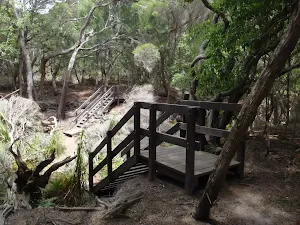
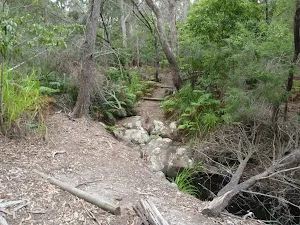
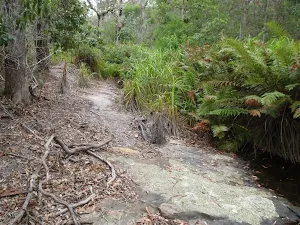
Moderate trackContinue straight: From the top of the stairs, this walk leads upstream of the creek, which is below on the right. The track follows this creek for some time, tending left away from it into the bush at times. The track winds slightly uphill for a while, then winds downhill to cross the rocky surface of another creek. The track heads up the hill and over the ridge before heading down to another creek bed. The track then leads up the hill to the cul-de-sac of a service trail.
(4km) Int. Light to Light Walk and Pulpit Rock Rd Access → Int. Light to Light Trk and Pulpit Rock Rd
260 m
4 mins
6m
-2m
Moderate trackVeer right: From the intersection, this walk follows the track marker along the hillside, keeping the ocean on the left of the track. The track passes a few overgrown service trails on either side, as it continues on to the signposted intersection with the main service trail.
(5km) Int. Light to Light Trk and Pulpit Rock Rd → Pulpit Rock
700 m
14 mins
3m
-49m
Hard trackContinue straight: From the intersection, the walk heads down the stairs just near the lookout. The stairs lead onto the rock shelf, with stunning views to the north (left) and of waves crashing onto the rocks below. At the end of this side trip, retrace your steps back to the main walk then Turn left.
Pulpit Rock
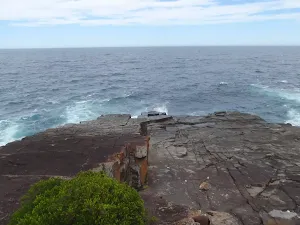
(5km) Int. Light to Light Trk and Pulpit Rock Rd → Ly-ee-moon Graveyard
2.8 km
49 mins
44m
-70m
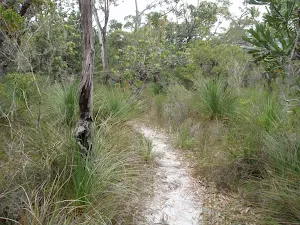
Moderate trackContinue straight: From the intersection, this walk heads through the heath following the arrow marker, and keeping the ocean on the left of the track. The track leads through the heath and Banksias for a short time, coming to a slightly overgrown service trail.
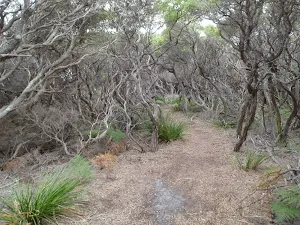
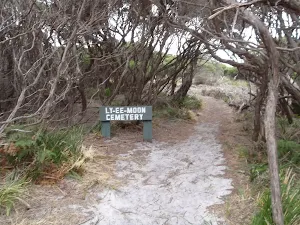
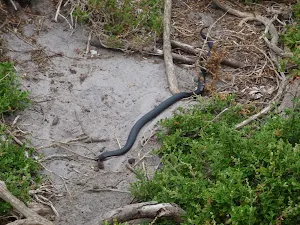
Continue straight: From the intersection, this walk keeps the ocean on the left of the track as it winds through the heath and the Banksias. The track soon becomes surrounded by melaleuca trees, which have many fallen branches. The track continues to a signposted intersection for 'Ly-ee-moon Cemetery'.
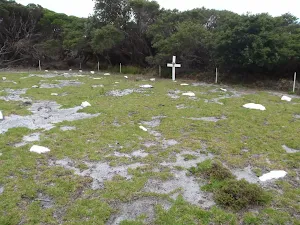
Ly-ee-moon Graveyard
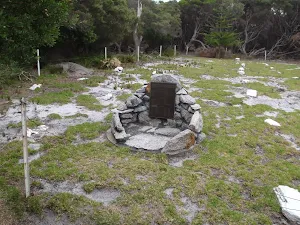
(7km) Ly-ee-moon Graveyard → Green Cape Lighthouse Car park
250 m
4 mins
5m
-3m
Easy trackGreen Cape
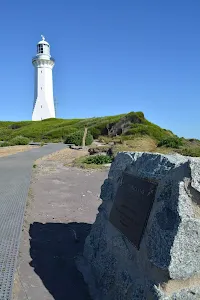
(8km) Green Cape Lighthouse Car Park → Green Cape Lighthouse Telegraph Station
90 m
2 mins
0m
-2m
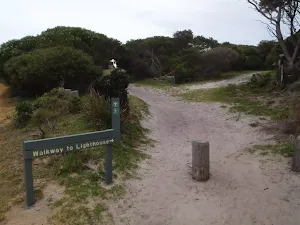
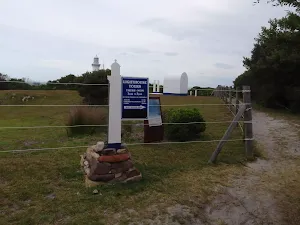
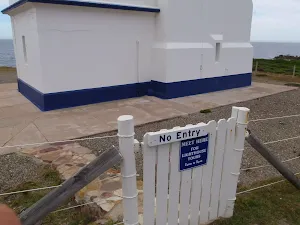
Easy trackContinue straight: From the intersection, this walk heads uphill along the boardwalk[8] (between the two handrails) to the 'Get the message' information sign[9]. The path now follows 'lighthouse 200m' sign[10] and the fence line for another 20m to come beside the white 'Signal Flag Locker' building and signpost[11]. This is the site of the old Green Cape Lighthouse Telegraph Station[12].
Green Cape Telegraph Station
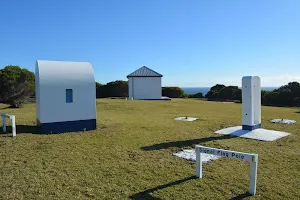
Cape Lighthouse Keepers
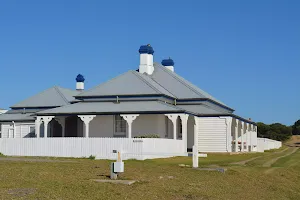
(8km) Green Cape Lighthouse Telegraph Station → Green Cape Lighthouse entry gate
180 m
3 mins
0m
-3m
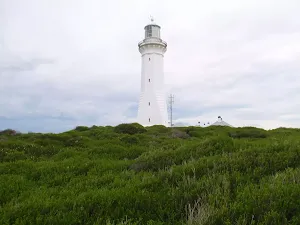
Easy trackGreen Cape Lighthouse
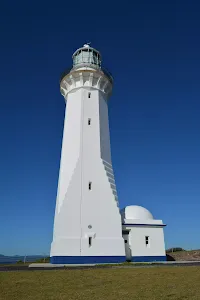
(8km) Green Cape Lighthouse entry gate → Green Cape Lookout
150 m
3 mins
0m
-11m
Easy track


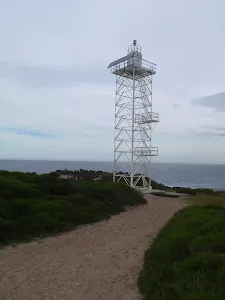
Continue straight: From the modern lighthouse tower, this walk follows the boardwalk[26] downhill around the metal tower. Ater about 15m the walk leads past the 'Wildlife navigates the coast safely' information sign[27], then continues mostly downhill for another 70m to the fenced lookout.
Green Cape Lookout
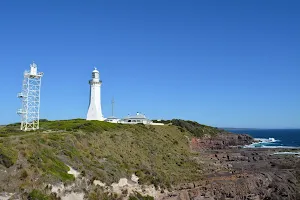
(8km) Green Cape Lookout → Green Cape Lighthouse Car Park
410 m
8 mins
16m
0m
Easy trackContinue straight: From the metal lighthouse tower, this walk follows the boardwalkgently uphill for about 45m to come to the corner of the fence for the original Green Cape Lighthouse tower[33] (there is a picnic tableabout 30m over the grass to the right[34] here). The walking continues along the boardwalk for another 25m to the gate[35] beside the Green Cape Lighthouse tower[36].
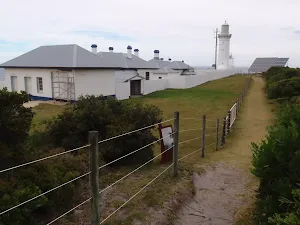
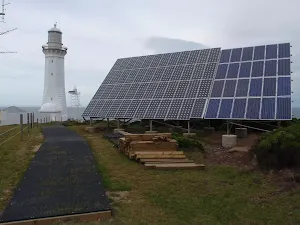
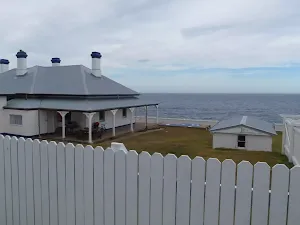
Continue straight: From the gate, the walk heads up the hill towards the large solar panels[37]. This walk keeps the houses and fence on the right undulates along the fence line to come to the signposted 'Signal Flag Locker' building[38] at the old 'Telegraph Station'.
Continue straight: From the beside the Green Cape Lighthouse Telegraph Station[39], this walk follows the fence (keeping the fence and clearing to the right) along the boardwalk as it winds into the heath to then find a 3-way intersection and a large sheltered 'Enjoying Green Cape' information sign[40].
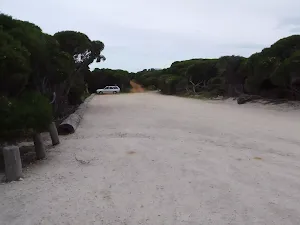
Continue straight: From the intersection, this walk heads gently downhill along the boardwalk with a handrail as it winds down to the dirt car park[41] at the end of Green Cape Lighthouse Rd.
Maps for the Bittangabee Bay to Green Cape Lighthouse walk
You can download the PDF for this walk to print a map.
These maps below cover the walk and the wider area around the walk, they are worth carrying for safety reasons.
| Narrabarba | 1:25 000 Map Series | 88232N NARRABARBA | NSW-88232N |
| Kiah | 1:25 000 Map Series | 88231S KIAH | NSW-88231S |
| Green Cape | 1:100 000 Map Series | 8923 GREEN CAPE | 8923 |
Cross sectional view of the Bittangabee Bay to Green Cape Lighthouse bushwalking track
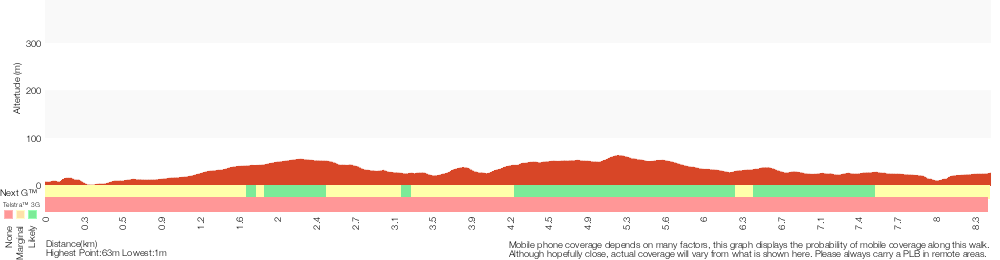
Analysis and summary of the altitude variation on the Bittangabee Bay to Green Cape Lighthouse
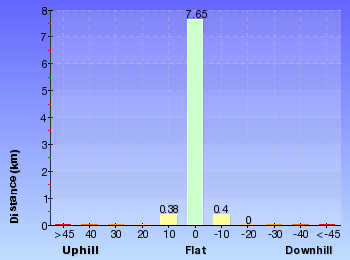
Overview of this walks grade – based on the AS 2156.1 – 2001
Under this standard, a walk is graded based on the most difficult section of the walk.
| Length | 8.5 km | ||
| Time | 3 hrs | ||
| . | |||
Grade 4/6 Hard track | AS 2156.1 | Gradient | Very steep (4/6) |
| Quality of track | Formed track, with some branches and other obstacles (3/6) | ||
| Signs | Directional signs along the way (3/6) | ||
| Experience Required | No experience required (1/6) | ||
| Weather | Weather generally has little impact on safety (1/6) | ||
| Infrastructure | Limited facilities, not all cliffs are fenced (3/6) |
Some more details of this walks Grading
Here is a bit more details explaining grading looking at sections of the walk
Gradient
4km of this walk has gentle hills with occasional steps and another 3.9km has short steep hills. Whilst another 440m is flat with no steps and the remaining 80m is very steep.
Quality of track
7km of this walk follows a formed track, with some branches and other obstacles and another 550m follows a clear and well formed track or trail. The remaining (520m) follows a smooth and hardened path.
Signs
Around 6km of this walk has directional signs at most intersection, whilst the remaining 2.3km is clearly signposted.
Experience Required
This whole walk, 8km requires no previous bushwalking experience.
weather
This whole walk, 8km is not usually affected by severe weather events (that would unexpectedly impact safety and navigation).
Infrastructure
Around 7km of this walk has limited facilities (such as not all cliffs fenced), whilst the remaining 1.9km is close to useful facilities (such as fenced cliffs and seats).
Similar walks
A list of walks that share part of the track with the Bittangabee Bay to Green Cape Lighthouse walk.
Pulpit Rock
110 m Return, 10 mins

Hard track
Ly-ee-moon Graveyard
490 m Return, 30 mins

Easy track
Bittangabee Bay picnic area to the storehouse
715 m Circuit, 20 mins
Hard track
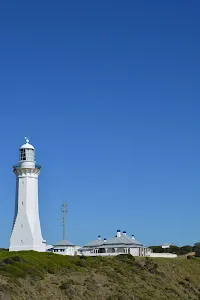
Green Cape Lighthouse and Lookout
826 m Return, 30 mins
Easy track
Bittangabee Bay to Southern point lookout
954 m Return, 30 mins

Moderate track
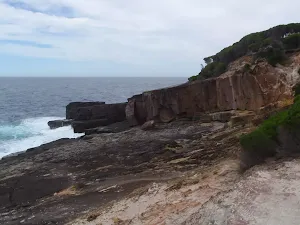
Green Cape to Pulpit Rock
3.8 km One way, 1 hr 30 mins
Hard track
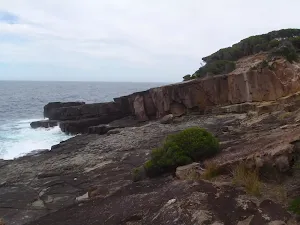
Bittangabee Bay to Pulpit Rock
5.3 km One way, 2 hrs
Hard track
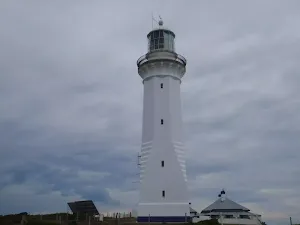
Light to Light Walk 2 days
30.9 km One way, 2 Days
Hard track
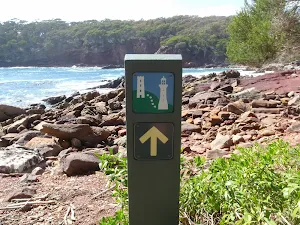
Light to Light Walk 3 days
30.9 km One way, 3 Days
Hard track
Other Nearby walks
A list of walks that start near the Bittangabee Bay to Green Cape Lighthouse walk.
Bittangabee Bay Imlay House loop
1.1 km Circuit, 30 mins

Moderate track
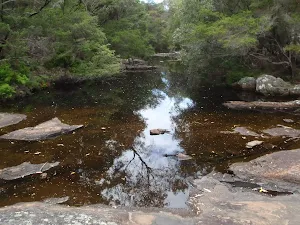
Bittangabee Bay to Bittangabee Creek
1.8 km Return, 45 mins
Moderate track
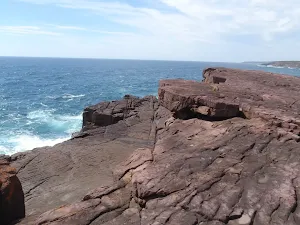
Bittangabee Bay picnic area to black cliffs
5.2 km Return, 2 hrs
Hard track
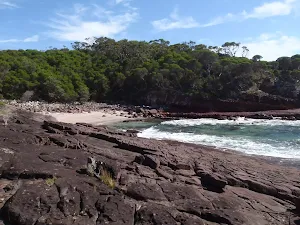
Bittangabee Bay to Hegartys Bay
9.1 km Return, 3 hrs 30 mins
Hard track
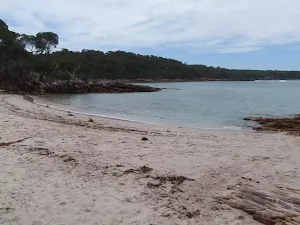
Bittangabee Bay carpark to beach
180 m Return, 5 mins
Moderate track
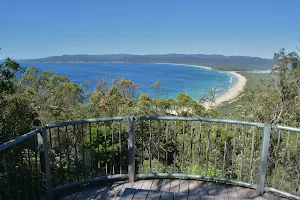
Disaster Bay Lookout
52 m Return, 10 mins
Easy track
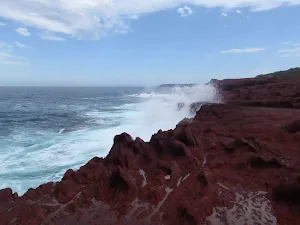
Saltwater Beach to Red Cliffs
3.3 km Return, 1 hr 30 mins
Moderate track
Saltwater Creek campsite to Mowarry Point
8.5 km Return, 3 hrs
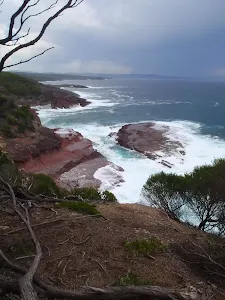
Hard track
Saltwater Creek to Bittangabee Bay
9.1 km One way, 3 hrs 30 mins
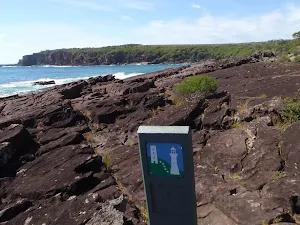
Hard track
Saltwater Creek to Hegartys Bay
9.8 km Return, 3 hrs 30 mins
Hard track
Saltwater Creek to Mowarry Point
8.5 km Return, 3 hrs
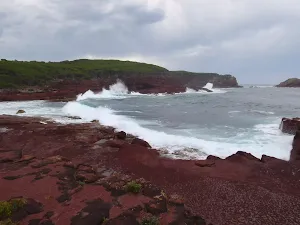
Hard track
Mowarry Bay to Red Cliffs
8.8 km Return, 3 hrs 30 mins
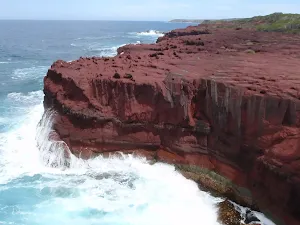
Hard track
Plan your trip to and from the walk here
The Bittangabee Bay to Green Cape Lighthouse walk starts at the Bittangabee Bay Picnic Area (gps: -37.216819, 150.01486)

The Bittangabee Bay to Green Cape Lighthouse ends at the Green Cape Lighthouse Car Park (gps: -37.259525, 150.04796)
Weather Forecast
This walk starts in the South Coast weather district.
Current Alerts
Park Information
Ben Boyd National Park
Ben Boyd National park is on the NSW South Coast, near Eden. The park was named and established in 1971, in the honour of Benjamin Boyd (1801-1851). Ben Boyd National park protects a wonderful section of coast line from Pambula to Green Cape, split into two distinct sections, one north of Eden and the other south. The park is well known for its contrasting red rocks, whale sighting, Boyd Tower, Green Cape Lighthouse and associated history. Ben Boyd National park offers some great insights into recent European history, Indigenous occupation and natural history. The park provides two campsites some other great recreational experiences.
Comments
Short URL: http://wild.tl/1w