Glenbrook to Lapstone via Euroka

Download & Print Map and Notes

Tap again to allow map panning

Time 2 Days
One way 18.8 km One way
Climb 1136 m
Grade 6 Very experienced only
Train Bus Car
no_pets
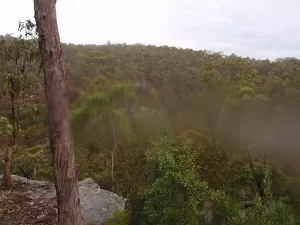
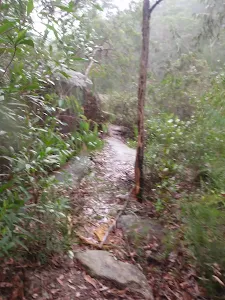
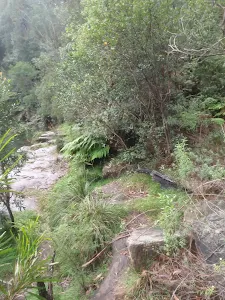
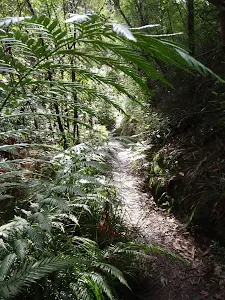
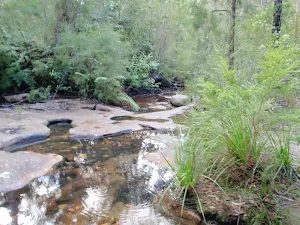
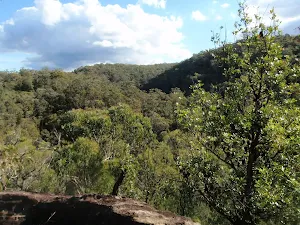
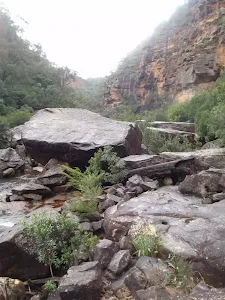
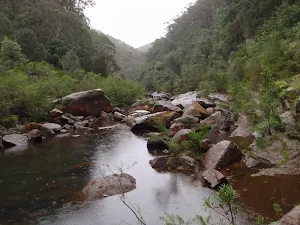
This two day walk covers large sections of the Glenbrook Gorge between the two train stations. As well as winding through the gorge, the walk travels up onto the ridges to pass Red Hands Cave and camp the night at Darug camping area. The gorge section from the causeway to the Nepean River presents many opportunities to get your feet wet, too. This is a wonderfully picturesque and challenging walk.

* This walk passes through very remote areas and sections have no visible track. At least one person in your group should have training and experience in off track walking and navigation. Even with these notes and a GPS these extra skills and equipment are required.

Glenbrook

Glenbrook is situated on the Great Western Highway and is a tourist hub for the lower Blue Mountains, with the Blue Mountains Visitor Information Centre located here. Glenbrook has quite a bustling little town centre with a number of cafes, bakeries and shops to explore. Prior to 1879, Glenbrook had changed its name numerous times, known at various times as Watertank, Wascoe Siding and Brookdale before being given its current name by Sir John Jamieson. Glenbrook is a gateway into the Blue Mountains National Park and is also the end point of the Woodford-Glenbrook mountain bike trail, along the Oaks Fire Trail. More info.

(0km) Glenbrook Station → End of Station St

distance 580 m time 10 mins climb 16m descent -9m Moderate track
From the top of Glenbrook Station, this walk turns left along Burfitt Pde (keeping the train line to the left of the footpath). The walk turns left over the bridge on Cowdery St and then the first right after the bridge, Station St. The walk continues to the bottom of Station St where there is a gate.

(1km) End of Station St → Station St mngt trail

distance 650 m time 12 mins climb 6m descent -16m Easy track
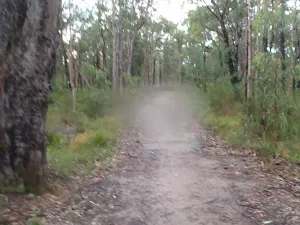
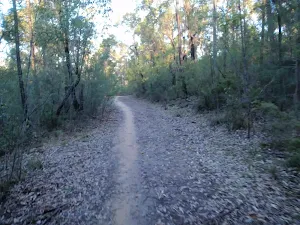
Veer left: From the intersection, the walk follows the trail along the back of the houses, keeping them on the left. The walk follows the straightest management trail, passing numerous side trails (that head off the ridge). The trail then leads over a number of water bars as the relatively straight trail meets the bush, where a defined single track continues down the hill.

(1km) Station St mngt trail → Glenbrook Creek Beach

distance 430 m time 17 mins climb 7m descent -102m Hard track
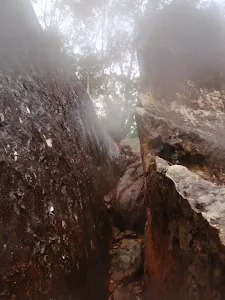
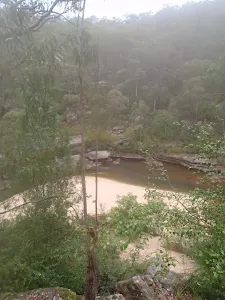
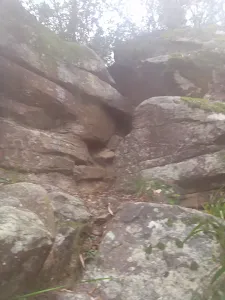
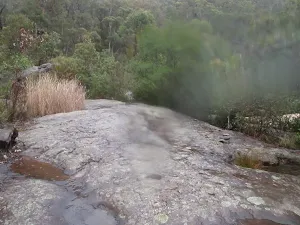
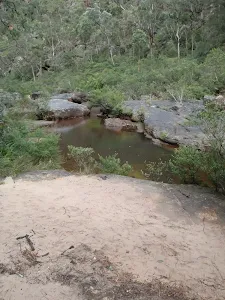
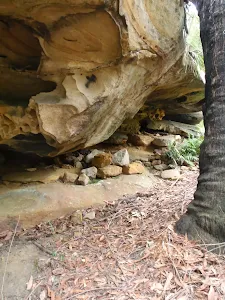
Turn left: From the intersection, the walk heads follows the bush track, downhill. The track steeply winds down over rock platforms and under overhangs, using a number of slots and cracks to descend the hill. The track continues winding steeply down the hill, coming to be near a sandy beach where the track climbs down a slot in the rock to reach the sand. The track then continues out across the sand to the turning point in the creek.

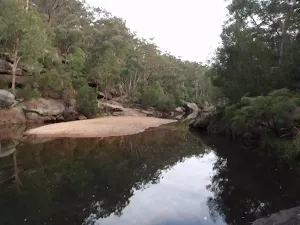
Glenbrook Creek Sandbar

Glenbrook Creek Sandbar
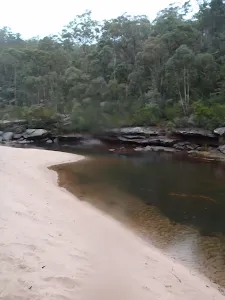
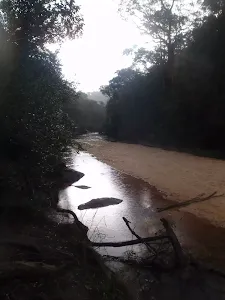
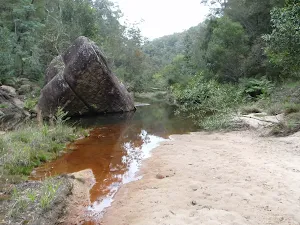
The sandbar is an unofficially-named beach on the banks of Glenbrook Creek. The beach has a fantastic white colour and some height above the water - a great spot for to camp or enjoy lunch.

(2km) Glenbrook Creek Beach → Int. Blue Pool and Glenbrook Gorge trks

distance 1 km time 26 mins climb 68m descent -72m Hard track
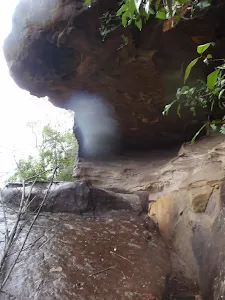
Turn left : From the beach, the walk keeps the water on the right as it heads to the end of the beach. The walk then crosses the creek over the rock platform and winds along the bank for quite some time. The track passes a rock overhang as it continues to undulate and wind above the creek (which is on the left). Tending right at a wider area of the creek (forming a pool), the track then turns left, crossing the again-narrow creek at a rocky section and leading up to an intersection, below a cliff line.

(3km) Int. Blue Pool and Glenbrook Gorge trks → Blue Pool

distance 70 m time 1 mins climb 2m descent -2m Hard track
Turn left: From the intersection, the walk keeps the water to the left as the track meanders below the cliffs for a very short time, to the bank of Blue Pool. At the end of this side trip, retrace your steps back to the main walk then Continue straight.

Blue Pool

Blue Pool
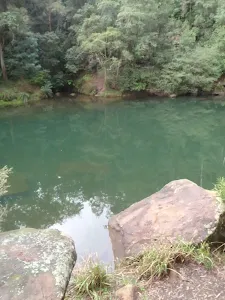
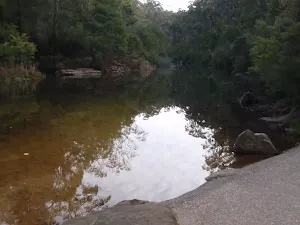
Blue Pool, Blue Mountains National Park, is named after the blue colour of the water. This appearance is caused by clay particles suspended in the water, which refract the light . This part of Glenbrook Creek is a popular swimming hole, but it is not patrolled.

(3km) Int. Blue Pool and Glenbrook Gorge trks → Int. Bruce Rd and Bruce Rd access trk

distance 210 m time 7 mins climb 24m descent -18m Hard track
Turn right: From the intersection, the walk heads alongside the creek (keeping the creek to the right). The track soon turns left up many steps, and comes to an un-signposted intersection below the road.
Turn right: From the intersection, the walk heads across the hillside tending left to a 'Blue Pool' sign at a corner in a road.

(3km) Int. Bruce Rd and Bruce Rd access trk → Eastern side of Causeway

distance 230 m time 5 mins climb 5m descent -13m Moderate track
Veer right: From the intersection, the walk heads down the road to the start of the causeway, with the fenced clearing to the left of the road.

Glenbrook causeway

Glenbrook causeway
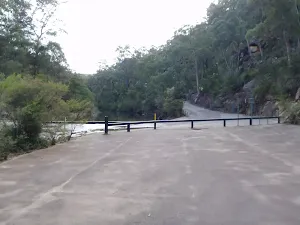
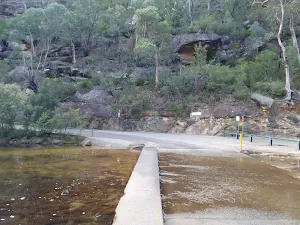
Glenbrook causeway is the only way for vehicles to cross Glenbrook Creek. It is a concrete road, with a raised gutter for pedestrians to cross the creek. The causeway is subject to flooding. Glenbrook causeway is a crossing point for many of the popular walks throughout the Glenbrook Valley area.

(3km) Eastern side of Causeway → Campfire Creek sign side of Causeway

distance 10 m time climb 1m descent 0m Moderate track
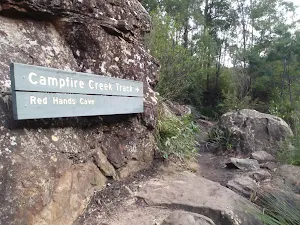
Veer right: From the paved area side of the causeway, the walk crosses the creek via the causeway, then heads to the area beneath the 'Camp Fire Creek Track' sign. The causeway may be impassable after rain.

(3km) Campfire Creek sign side of Causeway → Red Hands Cave

distance 3.1 km time 1 hr 12 mins climb 208m descent -92m Moderate track
Turn right: From the causeway, the walk follows the 'Camp Fire Creek Track' sign along the water's edge to the signposts for 'Red Hands Cave' and 'Car park'.
Continue straight: From the intersection, the walk follows the 'Red Hands Cave' sign, keeping the creek to the right. The track winds and undulates, soon coming to a rock platform which crosses a creek (with the gully on the left). Here, the walk continues along the lower track, not heading up the rock steps. The track continues along the hillside and comes to a sign titled 'Neighbours'.
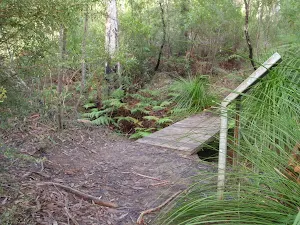
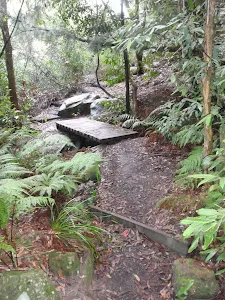
Continue straight: From the intersection, the walk heads across the small bridge and up the track. The walk soon passes over another small wooden bridge and then continues through the bush, with the creek on the right. Winding for a short time, the track comes to an un-signposted intersection.
Turn left: From the intersection, the walk heads up the hill, winding above the creek (on the right). The track follows the hillside for quite some time, passing near the creek in places, before coming to a 'Glenbrook Causeway' sign.
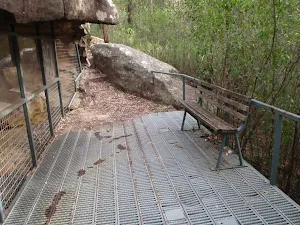
Continue straight: From the intersection, the walk follows the 'Red Hands Cave' sign down across the creek. The track leads over a small rise across another smaller creek, then follows the hillside for a short while, passing a bench seat and then a small log bridge. The track then starts tending left, heading up to a rocky outcrop where the walk arrives at the metal verandah of Red Hands Cave.

Red Hands Cave

Red Hands Cave
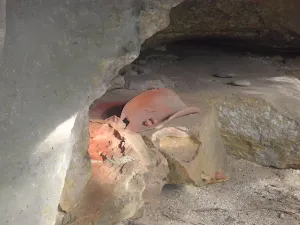
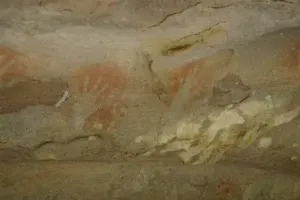
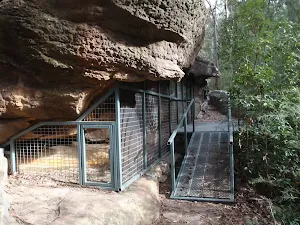
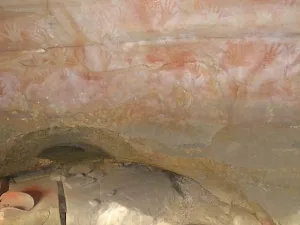
Red Hands Cave, in the Glenbrook area of the Blue Mountains National Park, is found near the end of Red Hands Cave fire trail. The cave has quite a few hand stencils and prints of various colours (including red). The cave is well protected, with a perspex and steel cage. There are some information signs and some artifacts to help visitors learn more about the people who made these prints over 1600 years ago. In 1913, when searching for a lost child, this cave was found by Europeans and is now protected.

(6km) Red Hands Cave → Red Hands Cave car park

distance 500 m time 12 mins climb 41m descent -10m Moderate track
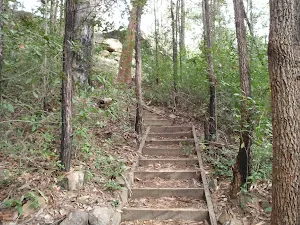
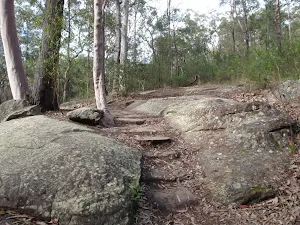
Continue straight: From Red Hands Cave, the walk heads up the stairs, winding to be above Red Hands Cave. The track then continues across the rocky surface, slowly climbing through the bush and leading away from the rock outcrop. The track winds through a few rocky outcrops, tending right, before coming to a car park and 'Red Hands Cave' sign (pointing back to the cave).

Red Hands Cave Picnic Area

Red Hands Cave Picnic Area
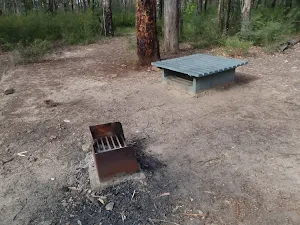
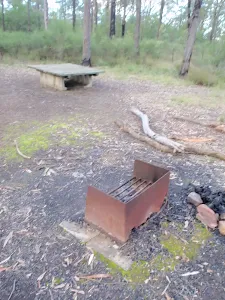
Red Hands Cave Picnic Area is found at the end of the Red Hands Cave Fire Trail in the Glenbrook area of the Blue Mountains National Park. The small picnic area is next to the car park and has a couple of platforms (to act as both a table and seat) as well as a fire place and toilet. The toilet itself is wheelchair accessible, but access to the toilet is over moderately rough terrain. A good spot to rest when exploring Red Hands Cave.

(7km) Red Hands Cave car park → Axe Grinding Grooves

distance 2.1 km time 44 mins climb 42m descent -161m Moderate track
Turn left : From Red Hands Cave car park, the walk follows the sign for the 'Link Track' past the bench and fireplace and into the bush. The track winds down the hill via many steps, winding for quite some time, then comes near a creek, which it loosely follows. The walk then crosses this creek to the signposts on the other side.
Turn left: From the creek intersection, the walk follows the 'Glenbrook Causeway' sign, keeping the water on the left. The track continues up to a rock overhang from where it heads down the hill, coming near the creek again. The track follows the creek to a junction with another creek. To the left is a large sandstone area and approximately 10m along the track is a sign explaining the grooves in the sandstone.

Axe Grinding Grooves

Axe Grinding Grooves
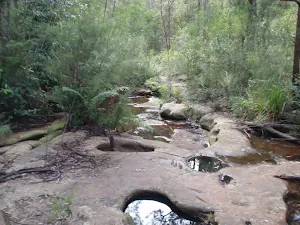
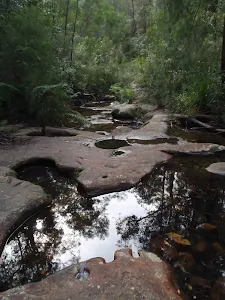
These well-defined axe grinding groves are found on the sandstone bed of Camp Fire Creek. The grooves were formed by Aboriginal people when sharpening axes (or forming axe blanks). Rubbing the axe blanks would sharpen the stone into a more useful tool, and the process would also wear the sandstone, leaving these markings. These sites are typically found near water, as the water was added to make the stone more abrasive. Sites like this will fade in time due to erosion of the sandstone - please help them last as long as possible by not walking on, or close to the grooves. More info.

(9km) Axe Grinding Grooves → The Ironbark Picnic Area

distance 970 m time 19 mins climb 90m descent -6m Experienced only
Turn sharp right: From where the main track crosses the small side creek (just above the axe grinding site), this walk follows the rocky side creek south-east, upstream. After about 20m, the gully splits in two. This walk follows a narrow track on the spur between these two creeks. The track heads up the spur line and crosses a number of rocky outcrops. Near the top of the hill, the bush becomes quiet dense. The track then opens out on the wide Oaks cycleway.
Turn right: From the intersection, the walk follows the wide track south, gently down the hill as it bends to the left. The track then heads down the hill a bit more steeply, and crosses a gully before gently climbing the other side. Not far after the gully, the track comes to an un-signposted intersection with the Ironbark access track, on the left.
Turn left : From the intersection, the walk follows the narrower track east towards the road. The track opens up at the car park, and the walk crosses the road to the Ironbark picnic area.

Ironbark Picnic Area

Ironbark Picnic Area
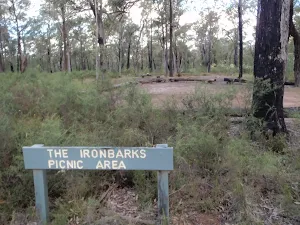
Ironbark Picnic Area is a basic picnic area on the Oaks Fire Trail, about 450m south of Euroka Rd. The picnic area has a low bench that acts as both a table and seat, and there is also a wood-fired barbecue provided. The picnic area is at the top of a gated management trail, which leads down to campsites at Euroka. There are plenty of car parking spaces provided and it is a fairly popular starting point for people cycling the Oaks Cycleway.

(10km) The Ironbark Picnic Area → Nioka Campsite

distance 1.3 km time 25 mins climb 4m descent -94m Moderate track
Continue straight: From the Ironbark Picnic Area, this walk follows the management trail south east by first stepping over the locked gate (pole). The wide trail then gently leads downhill. As the hill steepens a bit, the track becomes narrower. As the track approaches Euroka, there are a few sharp bends and the walk leads to the top of Nioka. The campsite comes into view, and the walk continues down the clear track, now with the camp ground on the right. The track then passes a toilet and continues down around the locked gate to the dirt road intersection just below Nioka campsite.

Euroka Campground - Nioka

The Nioka campground offers 20 sites to choose from. There is tap water at the park entrance.

Euroka Campground - Red Gum

The Red Gum campground offers 20 sites to choose from. There is tap water at the park entrance.

(11km) Nioka Campsite → Top of Darug campsite car park

distance 240 m time 5 mins climb 4m descent -4m Easy track
Veer left: From the dirt road just below the signposted 'Nioka' campsite, this walk follows the main road, initially keeping the campsite to the left. The walk heads across a small, bridged creek crossing and up to the intersection. At the intersection, there are some information signs about the area (on the right).
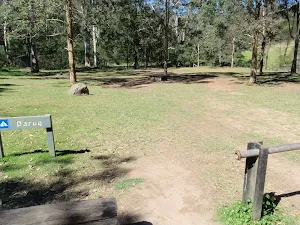
Continue straight: From the signposts, the walk follows the 'Daruk'[2] arrow along the flat dirt road, keeping the hill up to the left. After passing the garbage bins, the trail crosses a small creek and comes to an intersection with a bush track on the left, just before the signposted 'Darug' campsite.

Euroka Campground - Darug

Euroka Campground - Darug
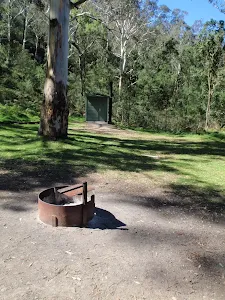
The Darug (sometimes labeled Daruk) campsite is found the Euroka Clearing, in the Glenbrook region of the Blue Mountains National Park. There are about 20 camping spaces to choose from in this area. Tap water is available at the park entrance. The campsite has a wheelchair-accessible toilet (access over grassy terrain) and a few metal fireplaces. The campsite is surrounded by large gum trees and is right at the base of a steep hill to the north.

End of day 1

This is the planned overnight stay for the end of day 1, happy camping.

(11km) Top of Darug campsite car park → Campfire Creek sign side of Causeway

distance 2.5 km time 56 mins climb 111m descent -130m Hard track
Turn left: From between the small creek crossing and the 'Darug' campsite, the walk follows the bush track up the hill, initially keeping Darug to the right. There are two tracks at time of writing, nearly parallel and heading to the same place. The track becomes steep and works its way up the steep rocky hill. At the top of this climb, the walk follows the track to the right and then the clear track meanders through the scrub. The track soon comes to an intersection with the signposted 'Portal waterhole' track (which heads off to the right).
Continue straight: From the intersection, the walk heads north, following neither of the arrows on the sign. The track soon comes to Mount Portal Trail, just next to the intersection with Euroka Road.
Veer right: From the intersection, the walk follows the 'The Causeway' sign, along the bush track. The track tends right into the low grassy bush. As the track continues down the hill, the grass gives way to wattle bush covering the gully. The track leads down many stairs then crosses a creek or two before winding along the hillside. The track then continues down into the gully to pass a fading track, on the left, then winds through to a hairpin corner on the road, marked by a 'Euroka Track' sign (pointing back the way you came).
Veer right: From the intersection, the walk heads down the steep road to the causeway.

(14km) Campfire Creek sign side of Causeway → Eastern side of Causeway

distance 10 m time climb 0m descent -1m Moderate track
Veer right: From the southern side of the causeway, the walk heads across the causeway to the road, next to the fenced, paved area. The causeway may be impassable after rain.

(14km) Eastern side of Causeway → Jelly Bean Pool

distance 320 m time 6 mins climb 5m descent -6m Hard track
Turn right: From the causeway, the walk heads through the blocked-off paved area, keeping the water on the right. The walk heads alongside the creek (the track is not very clear at this point) but winds around and over the large rocks beside the main creek (This creek does become impassable after heavy or prolonged rain). The soon the creek widens and turns into a large pool, where the track leads around the rocky outcrop to a metal staircase, above Jellybean Pool.

Jellybean Pool

Jellybean Pool
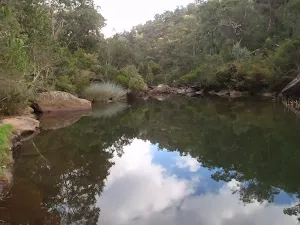
Jellybean Pool is a large pool in Glenbrook Creek, just south of the weir. The pool has a few sandy beaches, rock platforms and is surrounded by cliffs. Jumping and diving is not a good idea, and is not permitted. This is a popular spot for locals to swim. Swimming can be dangerous - the creek is especially dangerous after rain. Check with rangers before heading in.

(14km) Jelly Bean Pool → Int. Gorge Walking and Jelly Bean Pool Trk

distance 600 m time 14 mins climb 32m descent -38m Hard track
Continue straight: From the metal staircase at Jelly Bean Pools, the walk keeps the water on the right as it winds along the shore, downstream. The track meanders and undulates above the creek as it heads downstream to come to an intersection just before a small foot bridge.

Glenbrook Gorge

Glenbrook Gorge
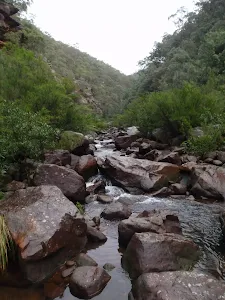
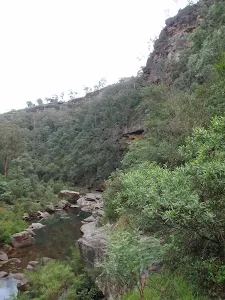
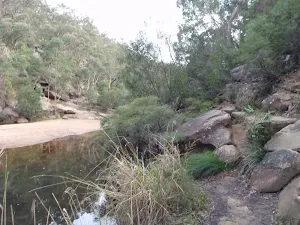
Glenbrook Gorge is a deep cut in the sandstone formed by Glenbrook Creek, just before it flows into the Nepean River. The spectacular gorge, the tall cliffs and the creek make for a great place to cool down in summer. The gorge can be very dangerous after rain, check with the rangers before entering.

(15km) Int. Gorge Walking and Jelly Bean Pool Trk → Glenbrook Gorge Beach

distance 270 m time 7 mins climb 9m descent -20m Hard track
Veer right: From the intersection, the walk crosses the footbridge and continues along the hillside, keeping the main creek to the right. The walk winds down past a pond (on the right) and continue downstream to a sandy beach.

Glenbrook Gorge Beach

Glenbrook Gorge Beach
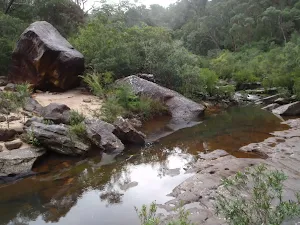
Glenbrook Gorge Beach is a small, sandy spot on a rock platform in Glenbrook Gorge. The beach is beside a fairly large pool, making a great spot to rest, especially on warmer days.

(15km) Glenbrook Gorge Beach → Int. at junction of Nepean River and Glenbrook Creek

distance 2.1 km time 1 hr 23 mins climb 332m descent -357m Very experienced only
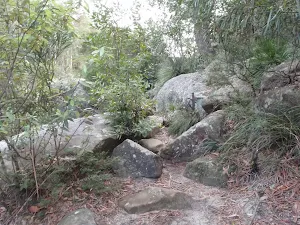
Continue straight: From the beach, the walk heads downstream, keeping the creek on the right for some time. The track winds, weaves and climbs its way down the gorge, crossing the creek numerous times. The track fades out completely, but the walk continues down the gorge generally following the creek. A large number of rock shelves and surfaces are used to speed the pace down the gorge as the walk continues, coming near to the junction with the Nepean River. The track crosses the creek to a rock shelf above a large boulder sitting in the creek, and a campground clearing nearby, on the far bank.
Continue straight: From the intersection, the walk leads downstream, keeping the creek below on the right as it heads along the rock shelf. The track continues to an intersection behind a large rock shelf, next to the river.

(17km) Int. at junction of Nepean River and Glenbrook Creek → Nepean Point

distance 150 m time 2 mins climb 0m descent 0m Experienced only
Veer right: From the intersection, the track winds down the rocky outcrop, keeping the mouth of the Glenbrook Creek behind on the right. The track winds down through the rocks onto the island-like stretch of land in the Nepean River. The track crosses many large round river stones which are slippery. The walk keeps the water close on the left as it heads out to the point. At the end of this side trip, retrace your steps back to the main walk then Turn right.

Nepean view point

Nepean view point
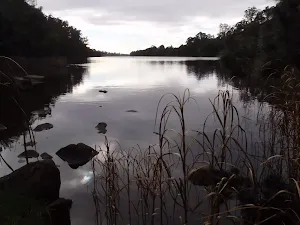
Nepean view point is an informal lookout which peers back down the Nepean River towards Penrith. The point is made from rocks deposited in the river and is now covered by trees and surrounded by reeds.

(17km) Int. at junction of Nepean River and Glenbrook Creek → Int. Tunnel Gully trk and Nepean Pt trk

distance 1 km time 22 mins climb 51m descent -41m Hard track
Continue straight: From the intersection, the walk keeps both the creek and river below on the right as it skirts around the rocks on the hillside. The track then leaves the rock platforms and winds for some time, undulating above the Nepean River which is below on the right. The track then tends left, up and away from the river to open onto a management trail.

(18km) Int. Tunnel Gully trk and Nepean Pt trk → Int. Tunnel Gully trk and car wreck trk

distance 430 m time 10 mins climb 68m descent 0m Moderate track
Turn left: From the intersection, this walk heads uphill along the management trail. After about 115 metres, the trail passes an electricity tower, where it tends left further up the hill. The trail continues up the hill to the ridge where a car wreck sits in the bush to the right, at an intersection with a track on the left.

(19km) Int. Tunnel Gully trk and car wreck trk → Lapstone lookout

distance 210 m time 5 mins climb 2m descent -29m Hard track
Turn left : From the intersection, the walk follows the single track away from the clear management trail. The track crosses the hillside and leads across the depression of a creek to rise onto a small ridge, and in intersection with a track on the left.
Turn left: From the intersection, the track leads down the ridgeline, keeping the houses and railway behind and the creek below on the left. The track winds down the rocky ridge to a rock surface with a view over the Nepean River. At the end of this side trip, retrace your steps back to the main walk then Turn left.

Lapstone Nepean View

Lapstone Nepean View
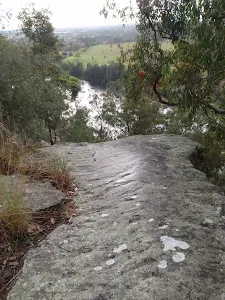
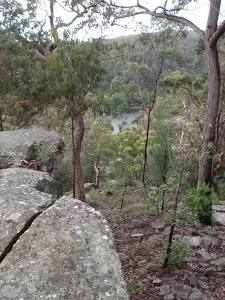
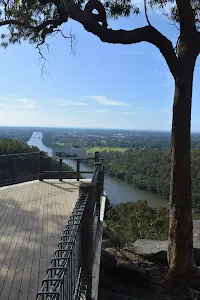
This informal and unfenced view point is just below Lapstone Station. There are stunning views up and down the Nepean River and across some farmland on the Cumberland Plain. A great spot to enjoy the views.

(19km) Int. Tunnel Gully trk and car wreck trk → Int. Station trk and Tunnel Gully trk

distance 120 m time 2 mins climb 5m descent 0m Moderate track
Continue straight: From the intersection, the track leads up the hill, keeping the car wreck behind on the right. The track undulates a little to an intersection below the train station.

(19km) Int. Station trk and Tunnel Gully trk → Platform 2 Lapstone Station

distance 50 m time 1 mins climb 7m descent 0m Moderate track
Turn left : From the intersection, the track heads up the hill to the train station.

Lapstone

The historic town of Lapstone is the eastern-most town in the Blue Mountains. The small township has a railway station, which is shares with the bordering town of Leonay. The station offers a public telephone and toilet. There are no commercial facilities in the area. The name 'Lapstone' is said to have come from the 'many water-worn stones in the area', which resemble the lapstone used by cobblers when making shoes.

Maps for the Glenbrook to Lapstone via Euroka walk

You can download the PDF for this walk to print a map.
These maps below cover the walk and the wider area around the walk, they are worth carrying for safety reasons.

Penrith1:25 000 Map Series90303N PENRITHNSW-90303N
Penrith1:100 000 Map Series9030 PENRITH9030

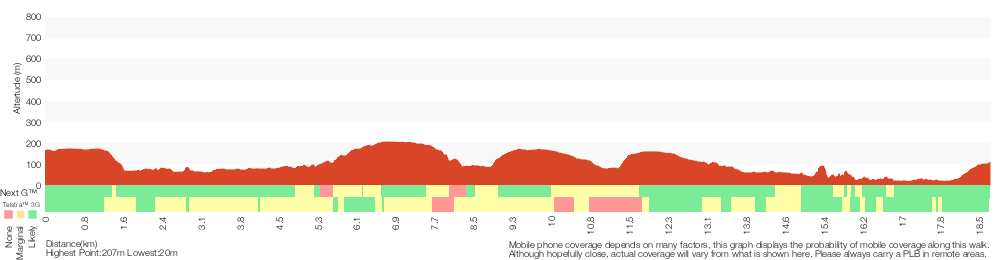
Cross sectional view of the Glenbrook to Lapstone via Euroka bushwalking track

Terrain profile for Glenbrook to Lapstone via Euroka

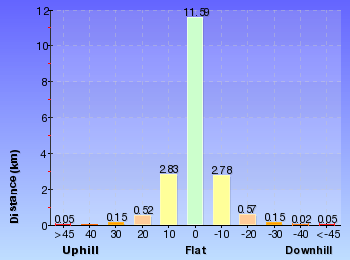
Analysis and summary of the altitude variation on the Glenbrook to Lapstone via Euroka

Altitude analysis for Glenbrook to Lapstone via Euroka

Overview of this walks grade – based on the AS 2156.1 – 2001

Under this standard, a walk is graded based on the most difficult section of the walk.

Length18.8 km
Time2 Days
.


Grade 6/6


Very experienced only
AS 2156.1GradientVery steep (4/6)
Quality of trackOff track (no visible track at times) (6/6)
SignsNo directional signs (5/6)
Experience RequiredModerate level of bushwalking experience recommended (4/6)
WeatherStorms may impact on navigation and safety (3/6)
InfrastructureNo facilities provided (5/6)

Some more details of this walks Grading

Here is a bit more details explaining grading looking at sections of the walk

Gradient

9km of this walk has short steep hills and another 8km is very steep. Whilst another 2.2km has gentle hills with occasional steps and the remaining 25m is flat with no steps.

Quality of track

9km of this walk follows a formed track, with some branches and other obstacles and another 4.4km follows a rough track, where fallen trees and other obstacles are likely. Whilst another 2km follows a clear and well formed track or trail and a 2km section follows a known route where there is no visible track. The remaining 1.6km follows a smooth and hardened path.

Signs

8km of this walk has directional signs at most intersection and another 4.5km is clearly signposted. Whilst another 3.4km has minimal directional signs and the remaining 2.7km Has no directional signs.
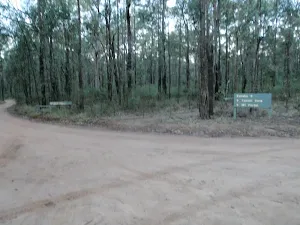
Experience Required

13km of this walk requires no previous bushwalking experience and another 4.3km requires some bushwalking experience. The remaining (1km) requires a leader a with moderate level of bushwalking experience.

weather

Around 16km of this walk is not usually affected by severe weather events (that would unexpectedly impact safety and navigation), whilst the remaining 3.1km is affected by storms that may impact your navigation and safety.

Infrastructure

9km of this walk is close to useful facilities (such as fenced cliffs and seats) and another 4.2km has limited facilities (such as not all cliffs fenced). Whilst another 3.2km has limited facilities (such as cliffs not fenced, significant creeks not bridged) and the remaining 2.7km has no facilities provided.
Similar walks

A list of walks that share part of the track with the Glenbrook to Lapstone via Euroka walk.
Other Nearby walks

A list of walks that start near the Glenbrook to Lapstone via Euroka walk.

Plan your trip to and from the walk here

The Glenbrook to Lapstone via Euroka walk starts at the Glenbrook Station (gps: -33.768940, 150.62134)


The Glenbrook to Lapstone via Euroka ends at the Platform 2 Lapstone Station (gps: -33.773274, 150.64281)

Weather Forecast

This walk starts in the Central Tablelands weather district.

Current Alerts

Park Information

Blue Mountains National Park

Attracting over 3 million visitors annually, Blue Mountains National Park holds some of Australia's most spectacular and diverse wilderness areas. Explore the Grose Valley, with its sheer sandstone cliffs, waterfalls and scenic walking, or enjoy the famous views of the Three Sisters. Easy access makes a day trips very worthwhile, but with such diversity it would be great to stay in one of the many B&B's and spend a few days soaking up the region.

Comments