
Barrenjoey Headland Walk
 Download & Print Map and Notes
 1 hr 30 mins
 2.3 km Return
 110 m
110 m Hard track




(0km) Barrenjoey Carpark (Palm Beach) → Beginning of Smugglers Track
 370 m
370 m
 6 mins
 1m
1m
 -1m
Easy track
-1m
Easy track(0km) Bottom of the Smugglers Track → Barrenjoey Lighthouse
480 m
17 mins
93m
-3m
Hard trackBarrenjoey Lighthouse
(1km) Barrenjoey Lighthouse → Southern Point Barrenjoey Headland
310 m
5 mins
3m
-9m
Moderate trackSite of the First Barrenjoey Lighthouses
Grave Of George Mulhall
Maps for the Barrenjoey Headland Walk walk
You can download the PDF for this walk to print a map.
These maps below cover the walk and the wider area around the walk, they are worth carrying for safety reasons.
| Broken Bay | 1:25 000 Map Series | 91301N BROKEN BAY | NSW-91301N |
| Ku-ring-gai Chase National Park Tourist Map | 1:40 000 Map Series | CMA Ku-ring-gai Chase National Park Tourist Map | CMA Ku-ring-gai Chase National Park Tourist Map |
| Sydney | 1:100 000 Map Series | 9130 SYDNEY | 9130 |
Cross sectional view of the Barrenjoey Headland Walk bushwalking track
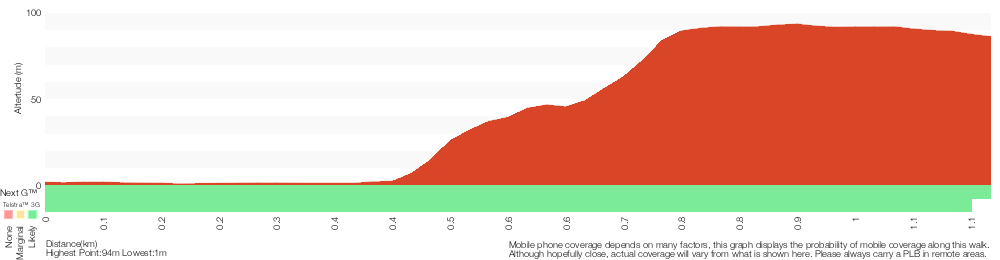
Analysis and summary of the altitude variation on the Barrenjoey Headland Walk
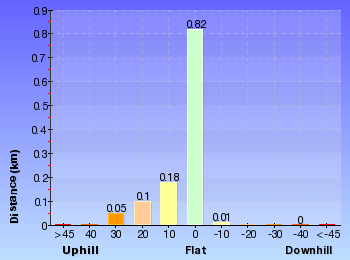
Overview of this walks grade – based on the AS 2156.1 – 2001
Under this standard, a walk is graded based on the most difficult section of the walk.
| Length | 2.3 km | ||
| Time | 1 hr 30 mins | ||
| . | |||
Grade 4/6 Hard track | AS 2156.1 | Gradient | Very steep (4/6) |
| Quality of track | Formed track, with some branches and other obstacles (3/6) | ||
| Signs | Directional signs along the way (3/6) | ||
| Experience Required | Some bushwalking experience recommended (3/6) | ||
| Weather | Weather generally has little impact on safety (1/6) | ||
| Infrastructure | Limited facilities, not all cliffs are fenced (3/6) |
Some more details of this walks Grading
Here is a bit more details explaining grading looking at sections of the walk
Gradient
Around 680m of this walk has gentle hills with occasional steps, whilst the remaining 480m is very steep.
Quality of track
Around 790m of this walk follows a formed track, with some branches and other obstacles, whilst the remaining 370m follows a smooth and hardened path.
Signs
Around 680m of this walk is clearly signposted, whilst the remaining 480m has directional signs at most intersection.
Experience Required
Around 840m of this walk requires no previous bushwalking experience, whilst the remaining 310m requires some bushwalking experience.
weather
This whole walk, 1.2km is not usually affected by severe weather events (that would unexpectedly impact safety and navigation).
Infrastructure
Around 790m of this walk has limited facilities (such as not all cliffs fenced), whilst the remaining 370m is close to useful facilities (such as fenced cliffs and seats).
Other Nearby walks
A list of walks that start near the Barrenjoey Headland Walk walk.
Mackerel Beach, West Head Loop
8.6 km Circuit, 5 hrs
Hard track
West Head Lookout
238 m Return, 10 mins

Easy track
Mackerel Beach Community
1.4 km Circuit, 45 mins

Moderate track
Mackerel Beach and Resolute Loop
5.4 km Circuit, 3 hrs
Hard track
Koolewong Track
810 m Circuit, 30 mins
Moderate track
Red Hands Cave
403 m Circuit, 30 mins
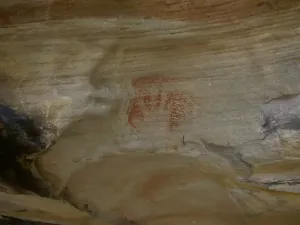
Moderate track
Aboriginal Heritage Track
1.1 km Circuit, 45 mins
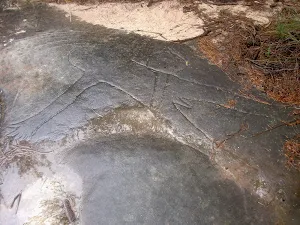
Moderate track
Resolute Track
3.7 km Return, 1 hr 30 mins
Hard track
Headland track (Resolute track)
3.5 km Circuit, 1 hr 45 mins
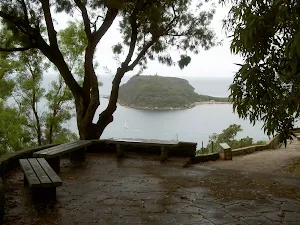
Hard track
West Head Lookout Track
1.9 km Return, 1 Hr
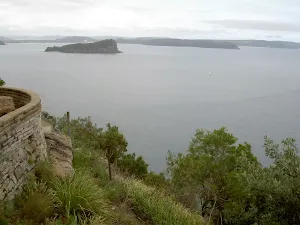
Moderate track
Flint and Steel Beach and bay loop
2.8 km Circuit, 1 hr 30 mins


Very experienced only
Flint and Steel track
2.1 km Return, 1 Hr

Moderate track
Plan your trip to and from the walk here
The Barrenjoey Headland Walk walk starts and ends at the Barrenjoey Carpark (Palm Beach) (gps: -33.585449, 151.32536)


Weather Forecast
This walk starts in the Metropolitan weather district.
Current Alerts
Park Information
Ku-ring-gai Chase National Park
A largely untouched wilderness on the northern boundary of Sydney, Ku-ring-gai Chase NP is one of Australia's oldest national parks. Here at the head of the Hawkesbury River, you'll find Aboriginal engravings and sites, as well as sandstone escarpments,
Comments
Short URL: http://wild.tl/t