
Epping to Thornleigh Station
 Download & Print Map and Notes
 3 hrs
3 hrs 8 km One way
 209 m
209 m Hard track




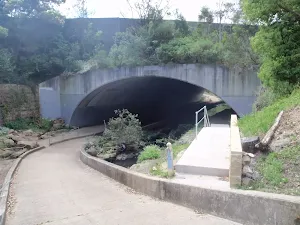
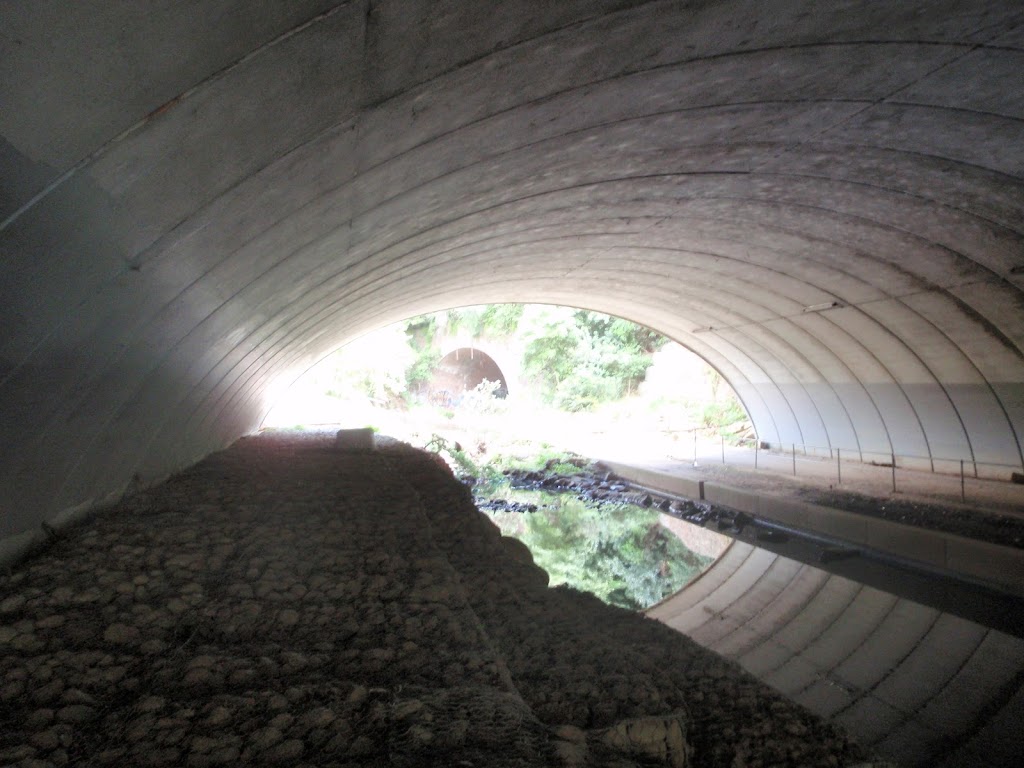
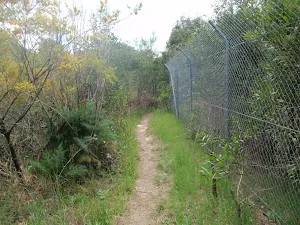
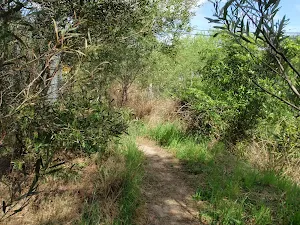

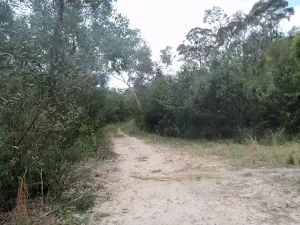
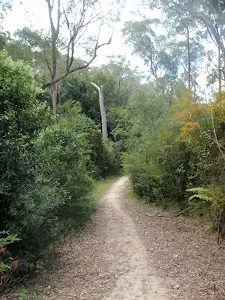
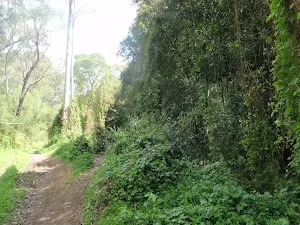
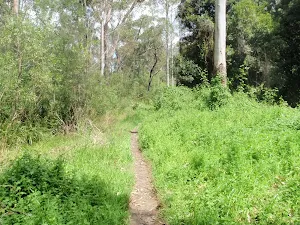
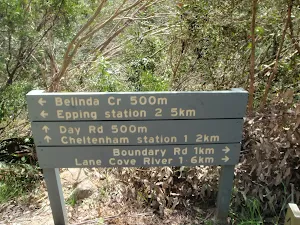
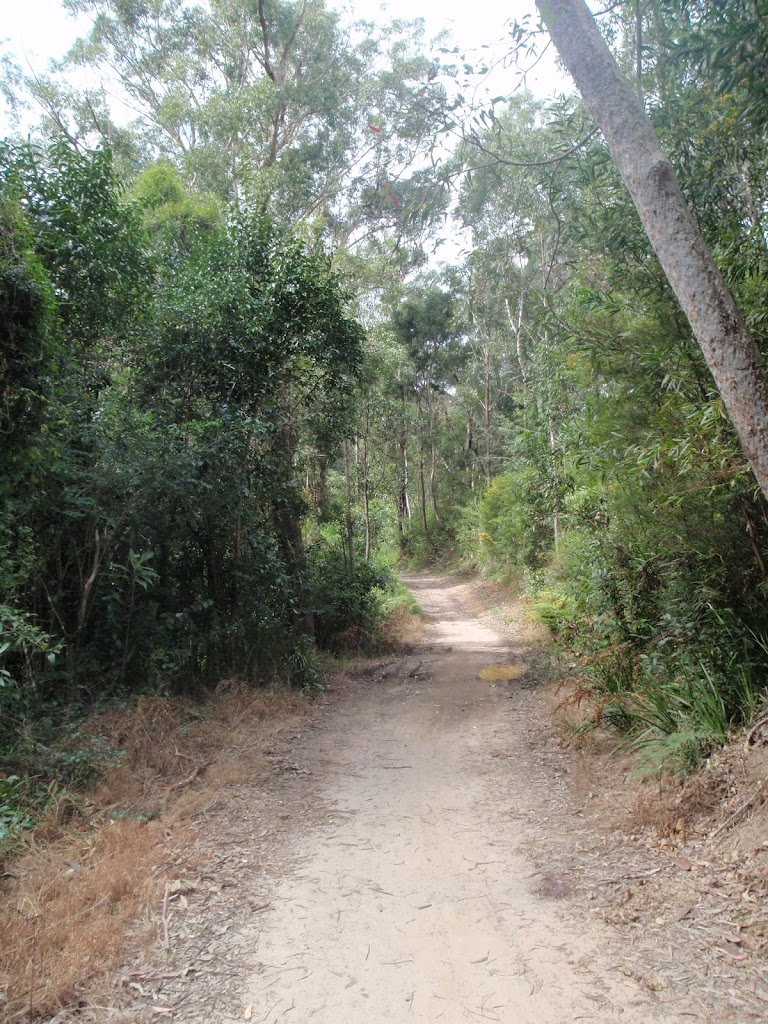
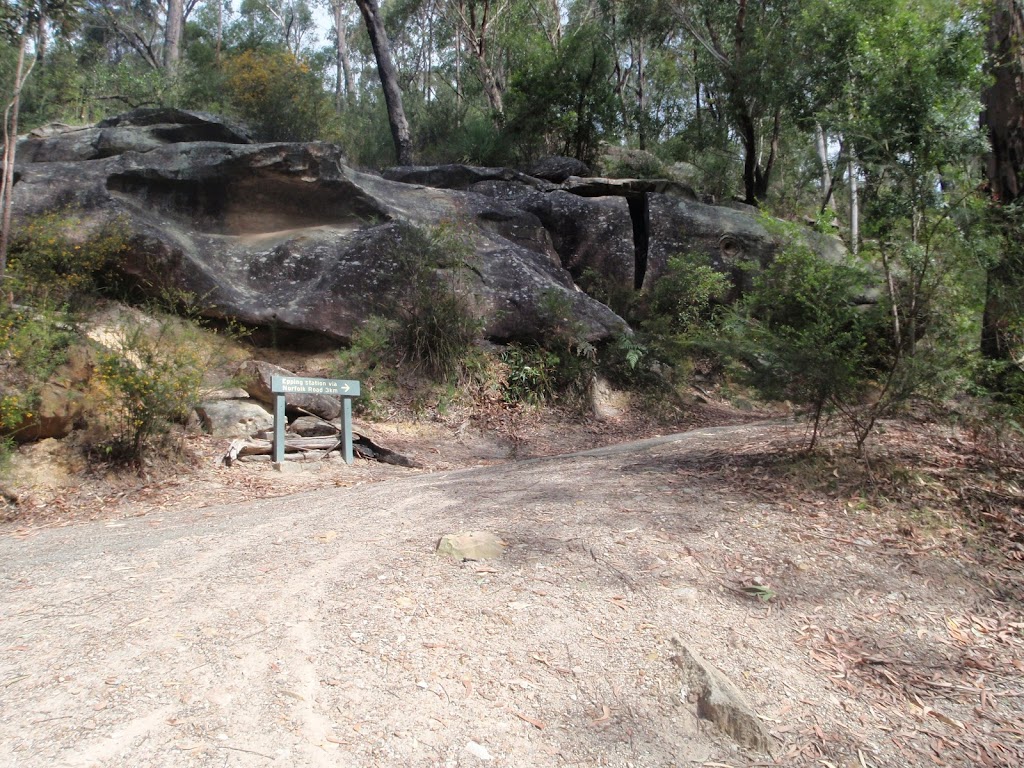

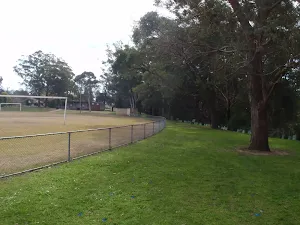
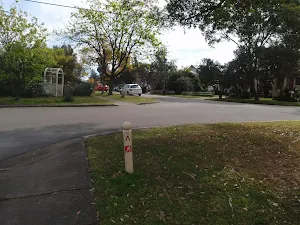
(0km) Epping Station → Int of Derby street service trail
 940 m
940 m
 18 mins
 3m
3m
 -33m
Very easy
-33m
Very easy(1km) Int of Derby street service trail → Int of Epping Trk and Malton Rd Trail
1.5 km
25 mins
7m
-21m
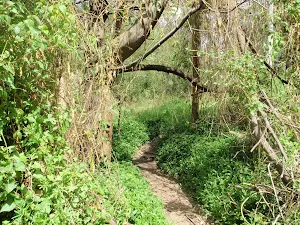
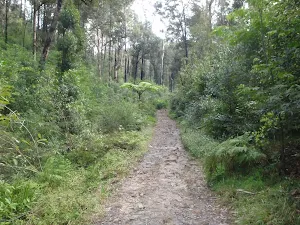
Moderate trackTurn left: From the intersection the track follows the Whale Rock sign down the service trail which narrows into a bushtrack and follows Devlin creek through the gully all the way along until it widens out into a rocky service trail again and comes to the intersection of the Cheltenham service trail.
(2km) Int of Epping Trk and Malton Rd Trail → Big Ducky Waterhole
190 m
3 mins
3m
-1m
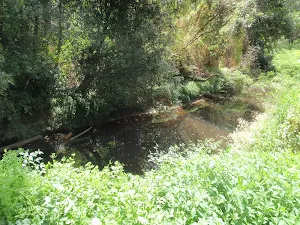
Easy trackBig Ducky Waterhole
(3km) Big Ducky Waterhole → Whale Rock
480 m
8 mins
6m
-9m
Easy trackWhale Rock
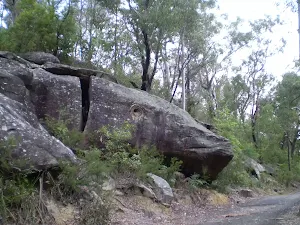
(3km) Whale Rock → Conscript Pass
3.3 km
1 hr 3 mins
102m
-65m
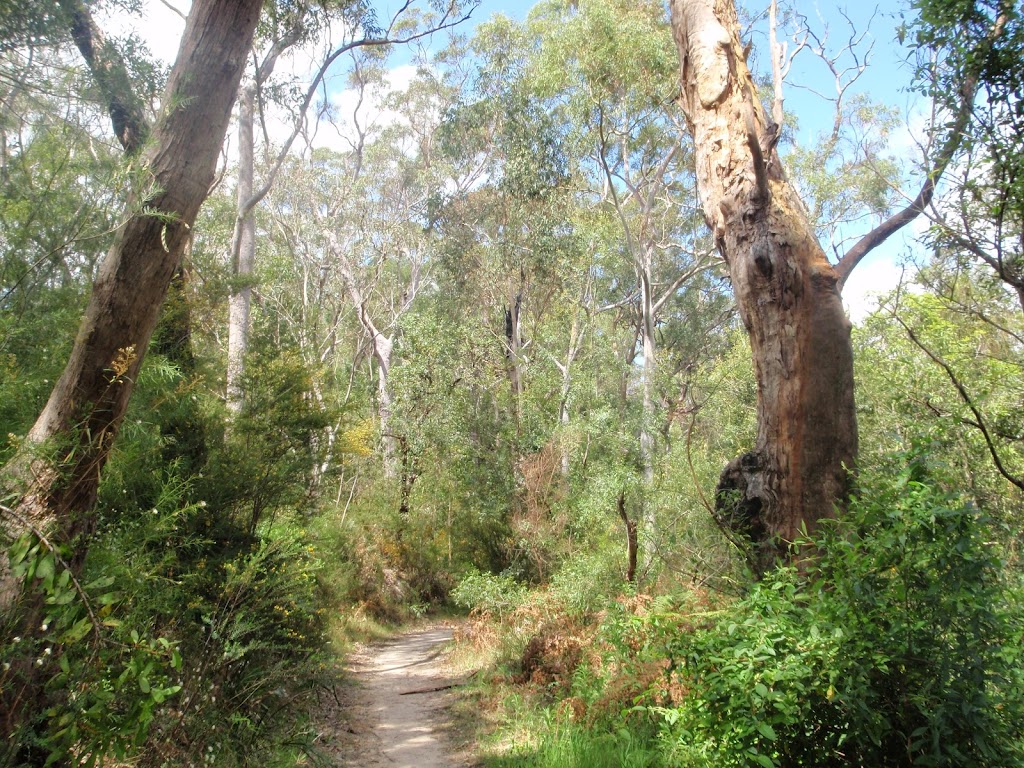
Moderate trackContinue straight: From the intersection the track follows the Thornleigh via Great North Walk arrow down the short but steep hill and across the river at the causeway. On the other side of the river the track comes up to the intersection of the Great North Walk service trail.
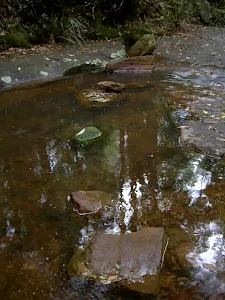
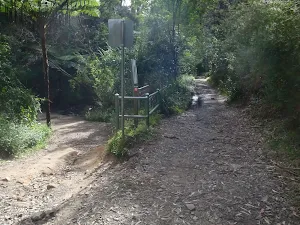
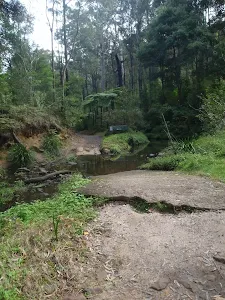
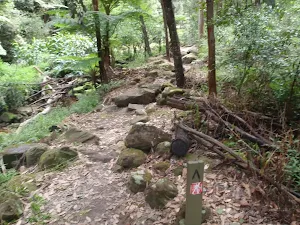
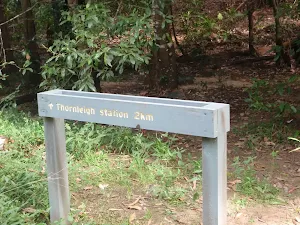
Turn left: From the intersection, this walk follows the 'Thornleigh Station' sign[1] past the 'Lane Cove Valley' map, initially keeping the other trail and river to your left. The trail follows the valley floor, keeping the river just to your left, for a bit over 500m, to then cross the Lane Cove River at a rocky ford[2]. This crossing may become impassable after heavy or prolonged rain. On the other side of the river, this walk continues along the trail[3] for about 400m (with the river now close by on your right) to come to an intersection with a faint track[4] (on your left, that leads up towards Pennant Hills Park).
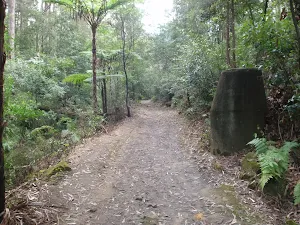
Continue straight: From the intersection, the walk follows the management trail, keeping the river just to your right. After about 60m, the trail bends right and crosses the Lane Cove River at a rocky ford[5], then continues along the valley floor among the fern trees (and concrete pipe access points[6]) for about 900m to cross the Lane Cove River again at another rocky ford[7]. (These crossings may become impassable after heavy or prolonged rain). The trail then continues along the valley floor[8] (with the river now on your left) for just over 150m to come to an intersection at the bottom of the sealed Morona Ave trail[9] (on your right), marked with a 'Lane Cove Valley' map/sign[10] and a GNW arrow post[11].
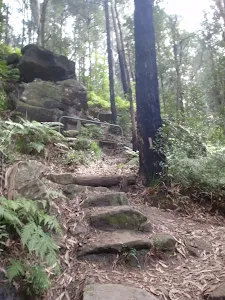
Veer left: From the intersection, this walk follows the GNW arrow post along the valley floor, away from the two trails, keeping the river just to your left. The track soon narrows, leading past a water depth indicator[12], and becomes rocky for about 150m before coming to a faint intersection, where GNW arrow post points left[13]. Here, the walk turns left and crosses the Lane Cove River using the concrete stepping stones[14] (this crossing may become impassable after heavy or prolonged rain) to follow the 'Thornleigh Station' sign[15] up the timber steps for about 40m and find a GNW registration box[16] (damaged at time of writing). The track bends sharply right[17] and zigzags up the rocky hill for another 30m, before bending sharply left to find the 'Conscript Pass' and 'B Stevens'[18][19] engravings (at the third metal hand rail).
Conscript Pass
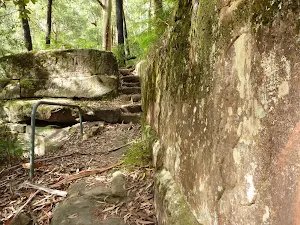
(6km) Conscript Pass → Int of the GNW and Lorna Pass tracks
(6km) Int of the GNW and Lorna Pass tracks → Int of Handley and Ferguson Avenues
580 m
14 mins
50m
0m
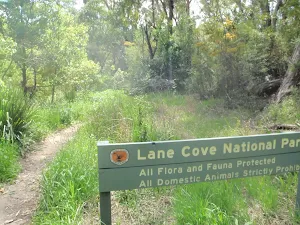
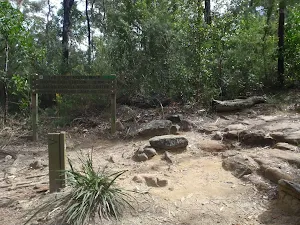
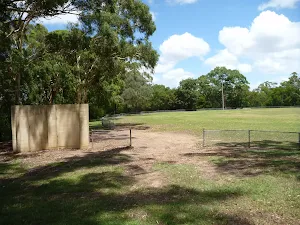
Hard trackVeer right: From the intersection, this walk follows the GNW arrow post and 'Thornleigh Station' sign[33] uphill along the wide rocky track[34]. After just over 150m, the track bends left (ignoring a faint track on your right[35]) and heads uphill for another 40m to come to the back (south-east corner) of Thornleigh Oval[36], marked with a 'Lane Cove National Park' signpost[37].
Turn right: From the intersection, this walk follows the GNW arrow post along the fence line around the oval, keeping the oval to your left. After about 100m, this walk passes in front of the clubhouse[38] (there are toilets[39] and a water tap[40] on your right) to pass a 'Great North Walk' sign[41] and come to the corner of 'Handley' and 'Ferguson' Avenues[42] in front of the 'Thornleigh Oval' sign[43].
Thornleigh Oval
(7km) Int of Handley and Ferguson Avenues → Int of Railway Parade and Pennant Hills Road overpass steps
810 m
14 mins
18m
-4m
Very easy(8km) Int of Railway Parade and Pennant Hills Road overpass steps → Thornleigh Train Station
110 m
2 mins
1m
-1m
Easy trackMaps for the Epping to Thornleigh Station walk
You can download the PDF for this walk to print a map.
These maps below cover the walk and the wider area around the walk, they are worth carrying for safety reasons.
| Hornsby | 1:25 000 Map Series | 91304S HORNSBY | NSW-91304S |
| Parramatta River | 1:25 000 Map Series | 91303N PARRAMATTA RIVER | NSW-91303N |
| Sydney | 1:100 000 Map Series | 9130 SYDNEY | 9130 |
Cross sectional view of the Epping to Thornleigh Station bushwalking track
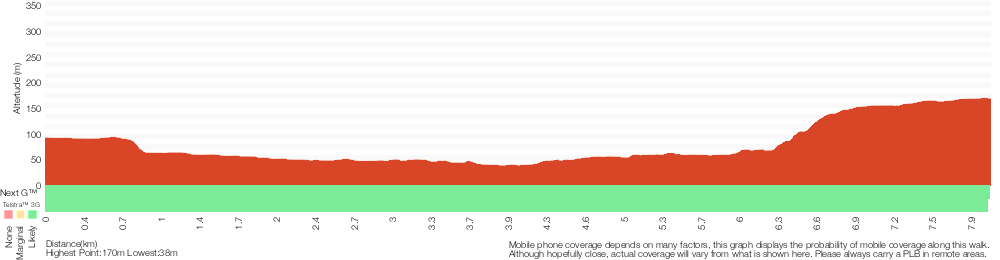
Analysis and summary of the altitude variation on the Epping to Thornleigh Station
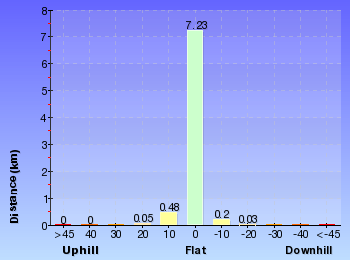
Overview of this walks grade – based on the AS 2156.1 – 2001
Under this standard, a walk is graded based on the most difficult section of the walk.
| Length | 8 km | ||
| Time | 3 hrs | ||
| . | |||
Grade 4/6 Hard track | AS 2156.1 | Gradient | Very steep (4/6) |
| Quality of track | Formed track, with some branches and other obstacles (3/6) | ||
| Signs | Directional signs along the way (3/6) | ||
| Experience Required | Some bushwalking experience recommended (3/6) | ||
| Weather | Storms may impact on navigation and safety (3/6) | ||
| Infrastructure | Limited facilities, not all cliffs are fenced (3/6) |
Some more details of this walks Grading
Here is a bit more details explaining grading looking at sections of the walk
Gradient
5km of this walk has gentle hills with occasional steps and another 1.9km is flat with no steps. Whilst another 630m has short steep hills and the remaining 230m is very steep.
Quality of track
4.7km of this walk follows a clear and well formed track or trail and another 1.9km follows a smooth and hardened path. The remaining (1.5km) follows a formed track, with some branches and other obstacles.
Signs
Around 6km of this walk is clearly signposted, whilst the remaining 2.1km has directional signs at most intersection.
Experience Required
Around 4.1km of this walk requires no previous bushwalking experience, whilst the remaining 3.9km requires some bushwalking experience.
weather
Around 4.7km of this walk is not usually affected by severe weather events (that would unexpectedly impact safety and navigation), whilst the remaining 3.2km is affected by storms that may impact your navigation and safety.
Infrastructure
Around 4.1km of this walk has limited facilities (such as not all cliffs fenced), whilst the remaining 3.9km is close to useful facilities (such as fenced cliffs and seats).
Similar walks
A list of walks that share part of the track with the Epping to Thornleigh Station walk.
Belinda Cres to Whale Rock
2.8 km Return, 1 Hr

Moderate track
Canoon Rd to Whale Rock
3.2 km Return, 1 hr 30 mins
Moderate track
Epping to Pennant Hills Station
5.3 km One way, 2 hrs
Moderate track
Thornleigh to Marsfield
6.1 km One way, 2 hrs 30 mins
Hard track
Epping to Cheltenham Station via Whale Rock
6.8 km One way, 2 hrs 30 mins
Hard track
Pennant Hills Park loop (via Lane Cove River)
8.2 km Circuit, 3 hrs
Hard track
Epping to Pennant Hills Station (via Lane Cove River)
8.4 km One way, 3 hrs 15 mins
Hard track
Epping Station Lane Cove River Loop
8.4 km Circuit, 3 hrs
Moderate track
De Burgs Bridge to Thornleigh station
9.7 km One way, 3 hrs 45 mins
Hard track
Epping to Eastwood Station (via Lane Cove River)
10.2 km One way, 3 hrs 45 mins
Moderate track
Eastwood to Thornleigh
10.3 km One way, 3 hrs 45 mins
Hard track
Macquarie Park to Thornleigh
11.6 km One way, 4 hrs 30 mins
Hard track
Epping to Hornsby Station
17.5 km One way, 6 hrs 45 mins
Hard track
Eastwood to Hornsby
20.6 km One way, 8 hrs
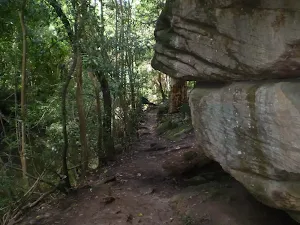
Hard track
Gordon to Hornsby (overnight at Scout camp)
25.8 km One way, 2 Days
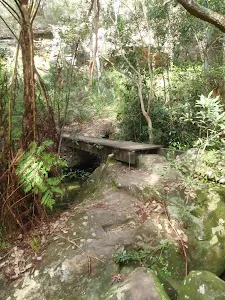
Hard track
Sydney to Thornleigh via Lane Cove Tourist Park
33 km One way, 2 Days
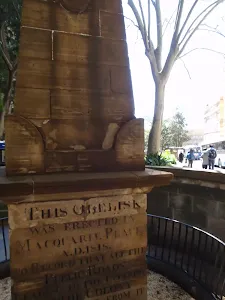

Hard track
Circular Quay to Hornsby
44.4 km One way, 3 Days
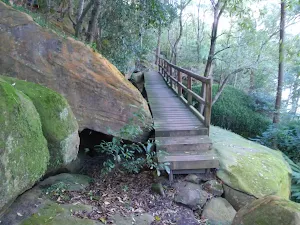
Hard track
Other Nearby walks
A list of walks that start near the Epping to Thornleigh Station walk.
Epping to Eastwood Station (via Terrys Creek)
4.1 km One way, 1 hr 30 mins
Moderate track
Epping to Gordon Station
11.7 km One way, 4 hrs 15 mins
Hard track
Vimeira Rd to De Burghs Bridge
5.1 km One way, 2 hrs
Hard track
Whale Rock
516 m Return, 15 mins
Moderate track
De Burghs Bridge to Fullers Bridge
6 km One way, 2 hrs 30 mins
Hard track
Browns Waterhole Track
1.3 km One way, 30 mins
Moderate track
Kissing Pt Rd to De Burghs Bridge
4.4 km One way, 1 hr 45 mins
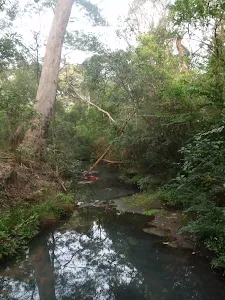
Hard track
Mambara Track
717 m Circuit, 20 mins
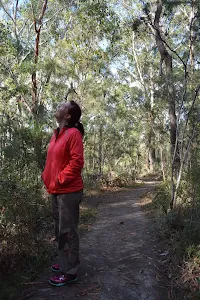


Very easy
Riverside Walking Track
5.5 km One way, 2 hrs
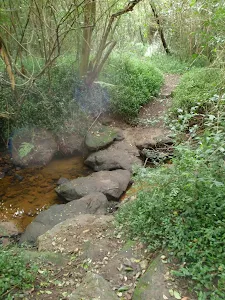
Hard track
STEP Track
2.7 km Circuit, 1 Hr
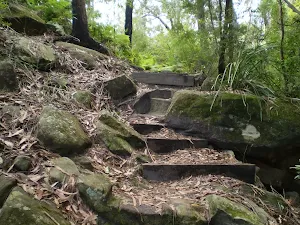
Moderate track
Stringybark Ridge and Zig Zag Creek loop from Thornleigh Station
6.6 km Circuit, 2 hrs 30 mins

Hard track
Thornleigh to Cowan
35.9 km One way, 2 Days
Hard track
Plan your trip to and from the walk here
The Epping to Thornleigh Station walk starts at the Epping Station (gps: -33.772529, 151.08242)



The Epping to Thornleigh Station ends at the Thornleigh Train Station (gps: -33.731948, 151.07815)
Weather Forecast
This walk starts in the Metropolitan weather district.
Current Alerts
Park Information
Lane Cove National Park
This small but picturesque city park is a haven of peaceful bushland along the winding Lane Cove River. Home to the Kukundi Wildlife Shelter and 27 km of the Great North Walk, you can also hire a boat, take a stroll or enjoy a picnic by the weir.
Bradley Reserve
Bradley Reserve is a large natural bushland area owned and managed by Ku-ring-gai council. The reserve extends from Lane Cove River to the end of Kissing Point Road north to George Christie playing fields. The reserve is home to the locally well know STEP track, and is cared for by the STEP inc, the "South Turramurra Environment Protection". The Great north walk also heads through this reserve, and is also home to Browns water hole.
Berowra Valley National Park
Following the Berowra Creek the Berowra Valley National Park is located on the Hornsby Plateau and is made up of typical Hawkesbury Sandstone. The great North walk, Benowie walking track, and many other great walks stretch spann this park. The area has varied vegetation including many different sorts of Eucalyptus and plenty of native animals, includingl swamp wallibies, water dragons, bandicoots, Lyre Birds, and bush turkeys. There are several campsites within the Park, and Crosslands Reserve is also a popular spot near the middle of the park.
Comments
Short URL: http://wild.tl/etts