Watsons Bay to Hornby Lighthouse

Download & Print Map and Notes

Tap again to allow map panning

Time 1 hr 15 mins
Return 2.8 km Return
Climb 93 m
Grade 2 Easy track
Ferry Bus Car
no_pets
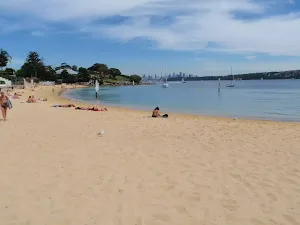
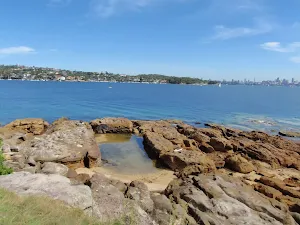
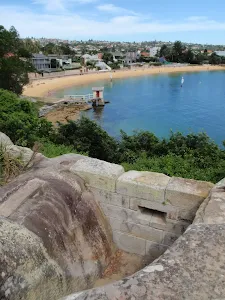
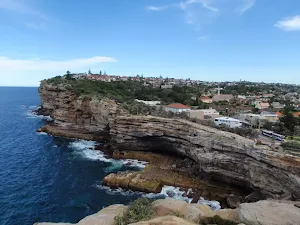
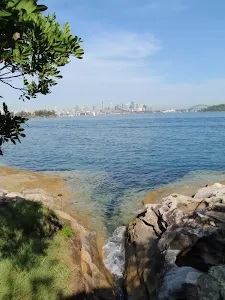
Start with a ferry ride, enjoy some great food, incredible views and visit some very significant historic sights. Starting at Watsons Bay, you will stroll along a few narrow roads before visiting the historic Camp Cove and its gorgeous beach. From here, walk up the old cobblestone road past more great views, then follow a clear path to the tip of Sydney Harbour's South Head and Hornby Lighthouse.

Watsons Bay

Watsons Bay
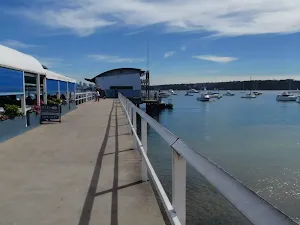
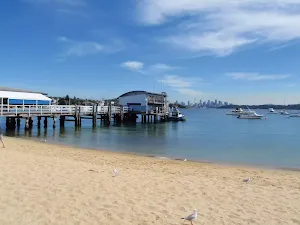
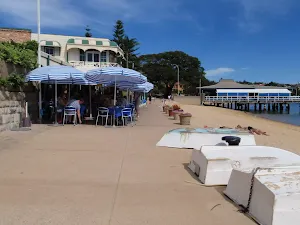
Watsons Bay is a popular spot to enjoy the harbour, Robertson Park and some fish and chips. Doyles offers a formal dining restaurant[1] and the more relaxed fish and chip shop[2] on the ferry wharf[3]. Robertson Park is a large open grassy park with some natural shade[4], a rotunda[5], toilets[6][7], children's play equipment[8], garbage bins[9] and picnic tables[10]. More info.

(0km) Watsons Bay Wharf → Int of Cove and Short Sts

distance 240 m time 4 mins climb 5m descent -1m Easy track
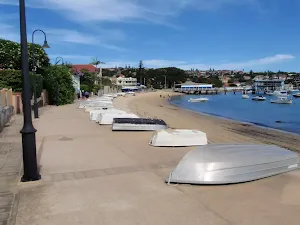
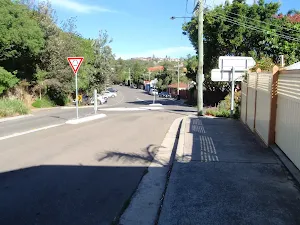
From Watsons Bay Wharf[11], this walk follows the footpath behind the beach, past 'Doyles Restaurant'[12], whilst keeping the water on your left. The footpath leads between the boats and the houses[13] and at the end of the beach, the walk turns right, heading up the path[14] to an intersection just below the junction of Cove and Short Streets[15].

(0km) Int of Cove and Short Sts → Camp Cove Beach

distance 350 m time 7 mins climb 13m descent -13m Easy track
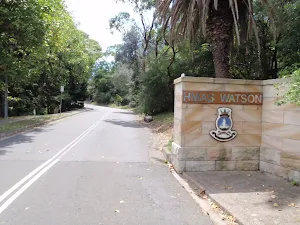
Turn right: From the intersection, this walk heads uphill [16] beside Short St, directly away from the water (against the flow of traffic). At the top of the hill, the walk soon turns left (at the roundabout)[17] and follows the footpath beside Cliff St for a short time, coming to an intersection and the sandstone gate at the entrance to 'HMAS Watson'[18].
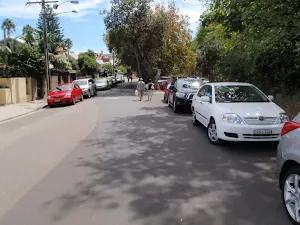
Veer left: From the near the sandstone pillars at the HMAS Watson entrance[19], this walk follows the 'Access to Camp Cove Beach and South Head Heritage Trail' sign[20] downhill along Cliff Street. The road soon leads to the signposted 'Camp Cove car park'[21][22] at the intersection with Victoria St.
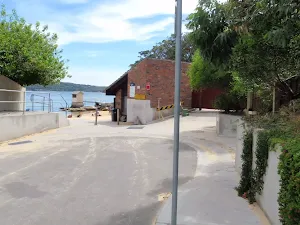
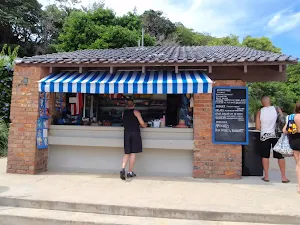
Continue straight: From the signposted 'Camp Cove Car Park[23], this walk follows the 'No Through Road' sign[24] to the end of 'Cliff St'. The footpath leads past a 'Camp Cove timeline' information sign[25] then, at the end of the road, turns left, coming to the front of the kiosk[26] at the northern end of Camp Cove Beach[27].

Camp Cove

Camp Cove
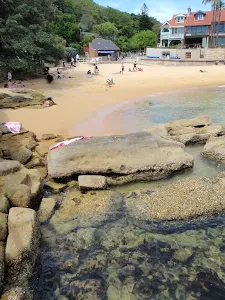
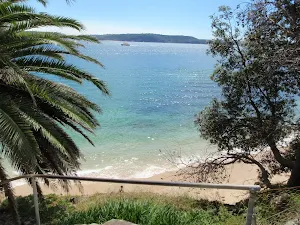
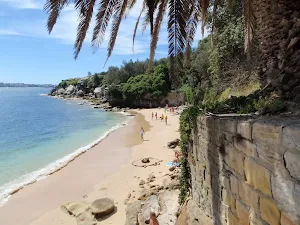
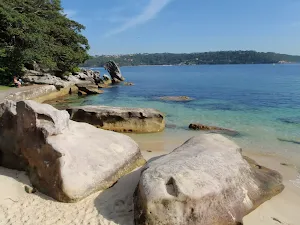
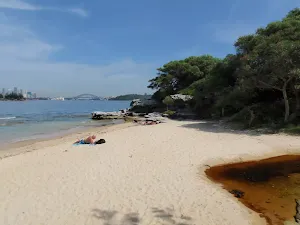
Camp Cove is home to a lovely, yellow sand, north-east facing beach. The cove is on the protected side of South Head and is a popular spot for swimming and relaxing on the beach. At the northern end of the beach is a kiosk[28], toilet block[29] and an entrance to Sydney Harbour National Park[30]. The cove was an important location to the Cadigal (Gadigal) people who gathered fresh water, shellfish, launched their canoes and buried some of their people nearby. This cove is also believed to be the first landing place for Europeans in 1788. The name Camp Cove was given during that landing and appears on the earliest maps of Sydney Harbour[33].

(1km) Camp Cove Beach → Cannon

distance 130 m time 3 mins climb 7m descent -3m Easy track
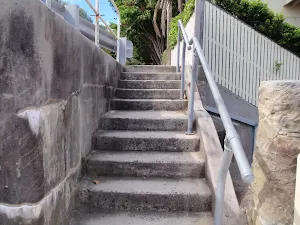
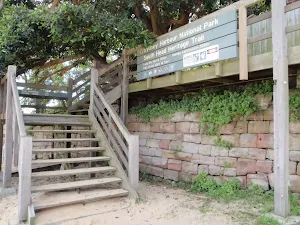
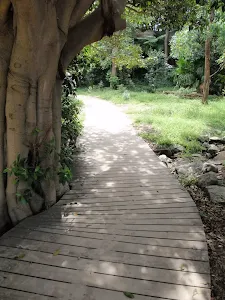
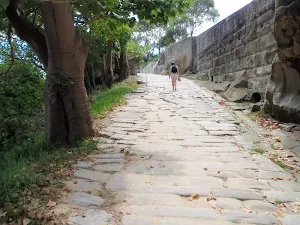
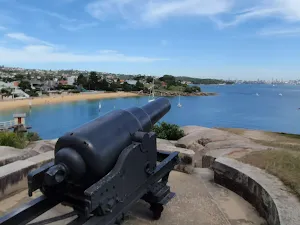
Veer right: From the front of Camp Cove Beach kiosk[34], this walk crosses the beach (keeping the water to your left)[35] and climbs up the timber staircase[36]. From the intersection at the top of the stairs, this walk continues straight, along the timber boardwalk[37] that soon turns into a concrete path. The path soon comes to a wide, cobbled sandstone path[38] that leads up a disused cannon[39], gun emplacement and great harbour views[40].

Cannon

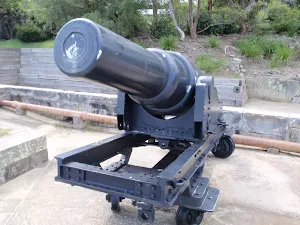
Cannon
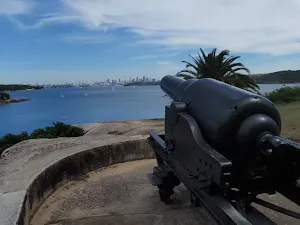
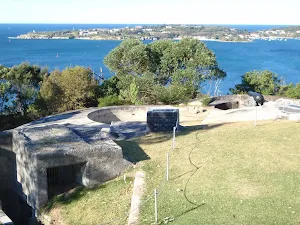
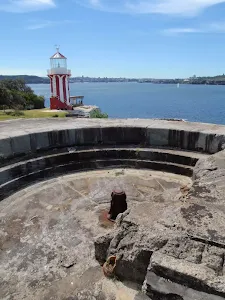
This cannon was placed here prior to 1890, along with the rest of this gun emplacement and rifle walls. The emplacement was designed to protect a military jetty and boat shed from the threat of an invasion. The 'Cobblestone Road' beside the cannon was built during the late 1870s or early 1880s and extends from the jetty in Camp Cove up to Hornby Road above. The road was build to carry supplies and ordnance from Camp Cove to the various military installations on south head. More info.

(1km) Cannon → Lady Bay Beach Int

distance 290 m time 6 mins climb 9m descent -12m Easy track
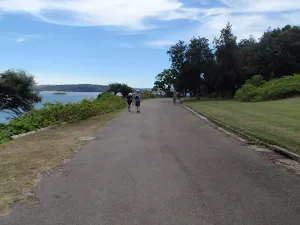
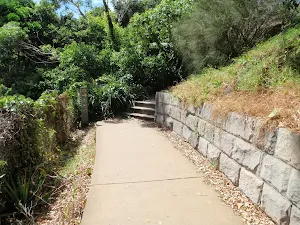
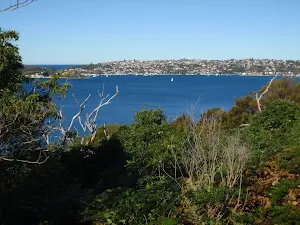
Continue straight: From the cannon, this walk heads up the path and steps and soon turns left to follow the old road[43]. The walk follows the old road, enjoying sweeping harbour views[44] (to your left). About 170m along this road (as it bends right), it passes a toilet block[45] then finds some garbage bins[46] at the end of the road. Here, the walk heads along the narrower footpath for ≈60m until coming to the signposted intersection above 'Lady Bay Beach'[47].

(1km) Lady Bay Beach Int → Lady Bay Beach

distance 30 m time 1 mins climb 0m descent -3m Moderate track
Turn left : From the intersection, the walk follows the 'Lady Bay Beach' sign[48] down the steps as they wind to the sandy beach below[49]. At the end of this side trip, retrace your steps back to the main walk then Turn left.

Lady Bay Beach

Lady Bay Beach
Lady Bay Beach is an official nudist beach found on the inside of South Head. Facing west, this beach is surrounded by a long cliff and a rocky shoreline[50][51]. There are great views across the water to Middle Head[52]. Officially declared a nude bathing beach by Neville Wran in 1976, nudity is only permitted on the beach and water. The beach is also known as 'Lady Jane Beach'. You are welcome to use the beach clothed or unclad. More info.

(1km) Lady Bay Beach Int → Lady Bay Lookout

distance 90 m time 2 mins climb 5m descent -2m Easy track
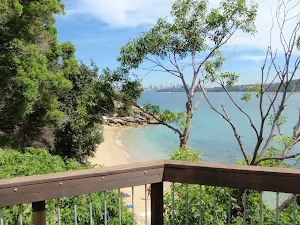
Continue straight: From the intersection, this walk heads gently downhill along the main path, keeping the large fence to your right[55]. The path leads down a few steps[56] and after ≈80m, heads up a few steps[57] then some more steps through a cleft in the rock[58] to find the fenced timber lookout platform looking over Lady Bay[59].

Lady Bay Lookout

Lady Bay Lookout
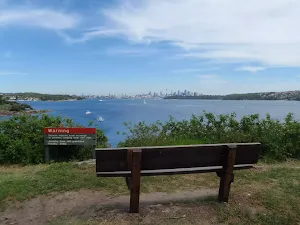
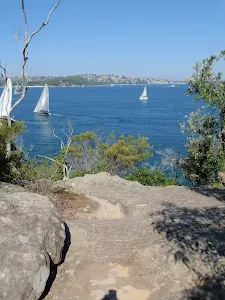
Some may find it strange having a lookout platform overlooking a nudist beach, but the harbour and city views are great[60]. This fenced and timber-decked lookout platform is found on the main walking track at the northern end of the bay. The lookout's main view is south-west along the beach and harbour towards North Sydney. There are a few trees growing up over the view, which adds further interest to the outlook.

(1km) Lady Bay Lookout → Circuit intersection

distance 60 m time 1 mins climb 5m descent 0m Easy track
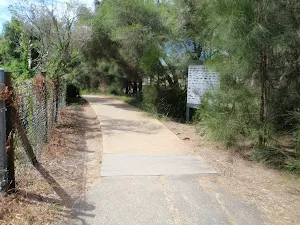
Continue straight: From Lady Bay Lookout, this walk heads up the steps and follows the timber boardwalk[61] a short distance until coming to a four-way intersection next to the large 'South Head Heritage Trail' sign[62].

(1km) Circuit intersection → Lightkeepers Cottage

distance 170 m time 3 mins climb 3m descent -10m Very easy
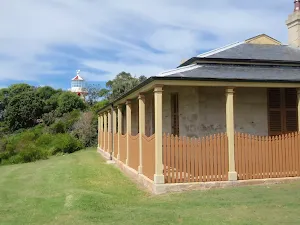
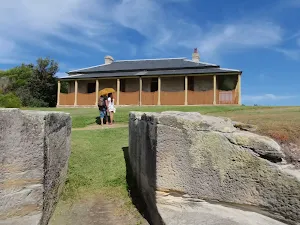
Veer left: From the intersection, this walk heads along the short section of timber boardwalk, past the 'South Head Heritage Trail' sign[63], keeping the filtered water views to your left[64]. The walk then follows the flat footpath through the heath and after ≈70m, the path leads to a large clearing with great views across the water[65]. The walk continues along this path, bending to the right[66] in front of the old Lightkeeper's cottage[67] and find a 'Lightkeeper's Cottages 1858' sign [68] between the old house and a gun emplacement[69].

Lightkeepers Cottage

Lightkeepers Cottage
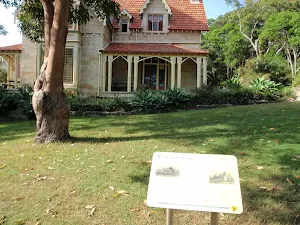
Two homes were built on South Head for the Hornby lighthouse keepers. The first cottage is the Head Lighthouse Keeper's Cottage in the clearing, with the assistant's house being closer to the lighthouse. This arrangement is unusual - normally, the head keeper's house would be closer. The head lightkeeper's house was completed about three years after the other house, around 1860. The first head lighthouse keeper was the well-motivated James Johnston, who was aboard the Dubar (a sailing ship on route from England) that smashed against the rocks near The Gap in 1857. 121 souls were lost that evening and James Johnston was the only survivor[71]. More info.

(1km) Lightkeepers Cottage → Hornby Lighthouse

distance 90 m time 2 mins climb 4m descent -1m Easy track
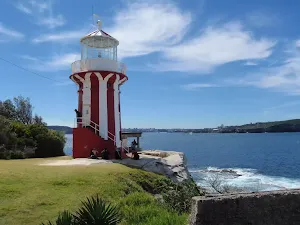
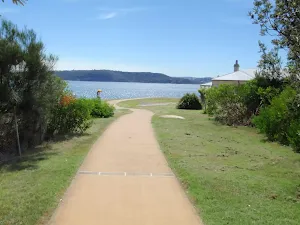
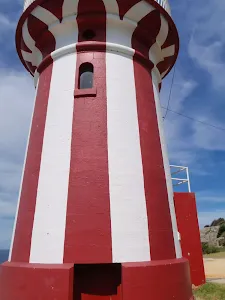
Continue straight: From the Lightkeepers Cottage, this walk heads along the footpath[72] across the small bridge[73], keeping the water views to your left. The path leads up and around to the right, past the concrete gun emplacement[74] to find the large red and white Hornby Lighthouse[75] and some great views.

Hornby Lighthouse

Hornby Lighthouse
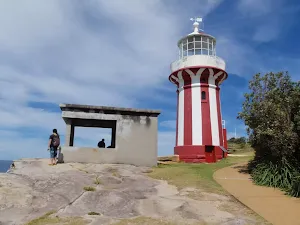
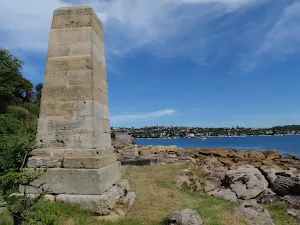
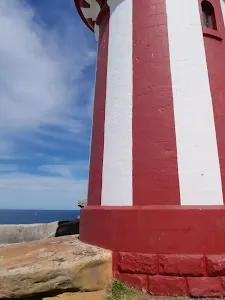
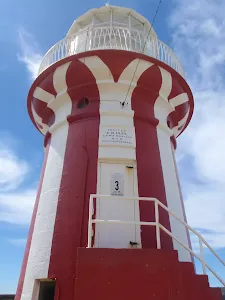
Opened by Sir William Denison (then Governor of New South Wales) in 1858, this distinct red and white vertical striped lighthouse was originally powered by a high-tech kerosene lantern. The lighthouse was built in response to two significant losses of life near South Head - firstly in 1857, the 'Dubar' (on it last leg from England), when 121 of the 122 people on board lost their lives, and soon after, the 'Catherine Adamson' when 21 lives were lost near North Head just two months later. Since 1933, this lighthouse has been automated and is now powered with a 12 volt, 55 watt Quartz Halogen Lamp (similar to a down light in a kitchen). More info.

Gun Emplacements

Gun Emplacements
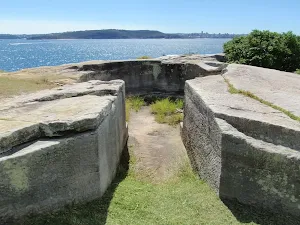
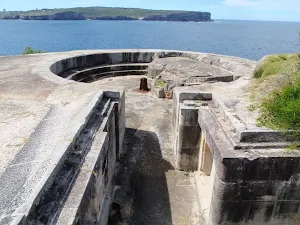
Gun emplacements like these have been built up and down the coast, and around the shores of Sydney Harbour. The first emplacement, built in 1788, was designed as a signalling station to notify the arrival of a ship. Then in 1839, the undetected arrival of ships, from the fast developing USA, caused a great concern. This triggered the building of the well-known fortifications at Bradleys Head and Fort Denison, as well as these ones at South Head. Another enemy at the time, France, then joined a campaign against a newer enemy - the Russians - in 1853, which prompted the completion of these gun emplacements. Guns were installed in 1872. In WWII, it was a Japanese enemy who these guns were trying to keep out, then in 1944, when the threat of invasion was less of a concern, the emplacements where disarmed[80]. More info.

(1km) Hornby Lighthouse → Circuit Intersection

distance 210 m time 5 mins climb 10m descent -6m Easy track
Continue straight: From Hornby Lighthouse, this walk heads uphill along the footpath, keeping the water views to your left. After ≈80m, the path leads to a 'Fortifications 1854' sign[81] and two large gun emplacement pits[82][83] a short distance apart.
Continue straight: From the Gun Emplacements and 'Fortifications 1854'[84] sign, this walk heads uphill along the footpath, away from the lighthouse. The path passes the second fortification[85] then an overgrown third fortification[86] as the path bends to the right [87]. The path then heads down and crosses the old road[88], following the path down the hill and soon comes to timber boardwalk, a four-way intersection and a large 'South Head Heritage Trail' sign[89] on your right. Now Turn right to rejoin the main walk .

Maps for the Watsons Bay to Hornby Lighthouse walk

You can download the PDF for this walk to print a map.
These maps below cover the walk and the wider area around the walk, they are worth carrying for safety reasons.

Sydney Heads1:25 000 Map Series91302N SYDNEY HEADSNSW-91302N
Sydney1:100 000 Map Series9130 SYDNEY9130

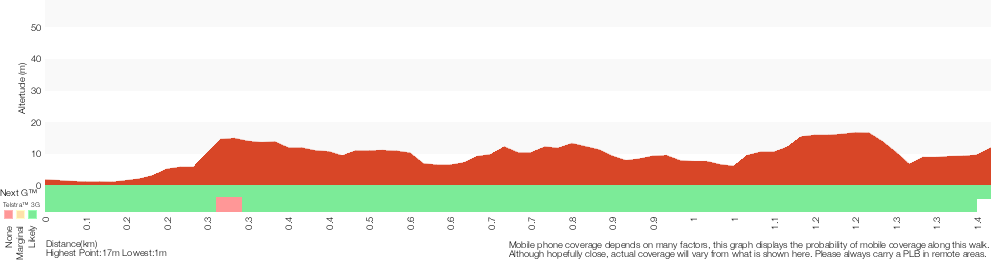
Cross sectional view of the Watsons Bay to Hornby Lighthouse bushwalking track

Terrain profile for Watsons Bay to Hornby Lighthouse

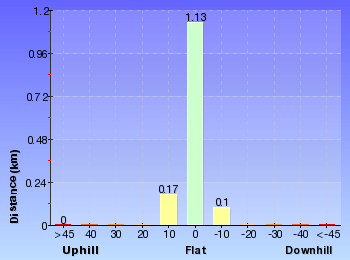
Analysis and summary of the altitude variation on the Watsons Bay to Hornby Lighthouse

Altitude analysis for Watsons Bay to Hornby Lighthouse

Overview of this walks grade – based on the AS 2156.1 – 2001

Under this standard, a walk is graded based on the most difficult section of the walk.

Length2.8 km
Time1 hr 15 mins
.


Grade 2/6


Easy track
AS 2156.1GradientGentle hills with occasional steps (2/6)
Quality of trackClear and well formed track or trail (2/6)
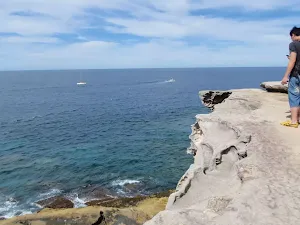
SignsClearly signposted (1/6)
Experience RequiredNo experience required (1/6)
WeatherWeather generally has little impact on safety (1/6)
InfrastructureGenerally useful facilities (such as fenced cliffs and seats) (1/6)

Some more details of this walks Grading

Here is a bit more details explaining grading looking at sections of the walk

Gradient

Around 890m of this walk has gentle hills with occasional steps, whilst the remaining 520m is flat with no steps.

Quality of track
Around 1.4km of this walk follows a smooth and hardened path, whilst the remaining 55m follows a clear and well formed track or trail.
Signs

This whole walk, 1.4km is clearly signposted.

Experience Required

This whole walk, 1.4km requires no previous bushwalking experience.

weather

This whole walk, 1.4km is not usually affected by severe weather events (that would unexpectedly impact safety and navigation).

Infrastructure

This whole walk, 1.4km is close to useful facilities (such as fenced cliffs and seats).

Similar walks

A list of walks that share part of the track with the Watsons Bay to Hornby Lighthouse walk.
Other Nearby walks

A list of walks that start near the Watsons Bay to Hornby Lighthouse walk.

Plan your trip to and from the walk here
The Watsons Bay to Hornby Lighthouse walk starts and ends at the Watsons Bay Wharf (gps: -33.843316, 151.28183)


Weather Forecast

This walk starts in the Metropolitan weather district.

Current Alerts

Park Information

Sydney Harbour National Park

One of Sydney's most diverse parks, Sydney Harbour National Park is formed from 11 pockets of harbour islands and shoreline. Highlights include coastal walks and swimming, breath-taking viewpoints, tours of colonial buildings and Aboriginal cave art.

Comments